
Things to Do
Hear Live Music Inside NYC's Catacombs
Enter to win a pair of free tickets to an intimate concert performed inside the catacombs of The Green-Wood Cemetery!
Enter to win a pair of free tickets to an intimate concert performed inside the catacombs of The Green-Wood Cemetery!

Explore the home of Free Shakespeare in the Park at the first open house event of the season!


Given the recent holiday season, Harlemites might have noticed the very apropos naming of one of the neighborhood’s main thoroughfares, St. Nicholas Avenue. Extending north-south from 111th Street to 193rd Street, St. Nicholas Avenue is, of course, named after that Saint Nicholas, 4th century saint, Greek bishop of the once important Lycian city Myra (now called Demre, Turkey), and the inspiration for today’s Westernized St. Nick, also known as Santa Claus. St. Nicholas Avenue’s namesake, often called Sinterklauss or Nikolaos the Wonderworker by the Dutch emigrants who held him especially dear, as patron saint of New Amsterdam.
The street was not always called St. Nicholas Avenue, however. Before the Dutch settlers who founded the colony of New Amsterdam had built the road itself, the route along St. Nicholas was already an old Indian path called Weekquaeskeek, after one of the Algonquin tribes living in the area (the word itself is believed to mean “place of the bark kettle”).
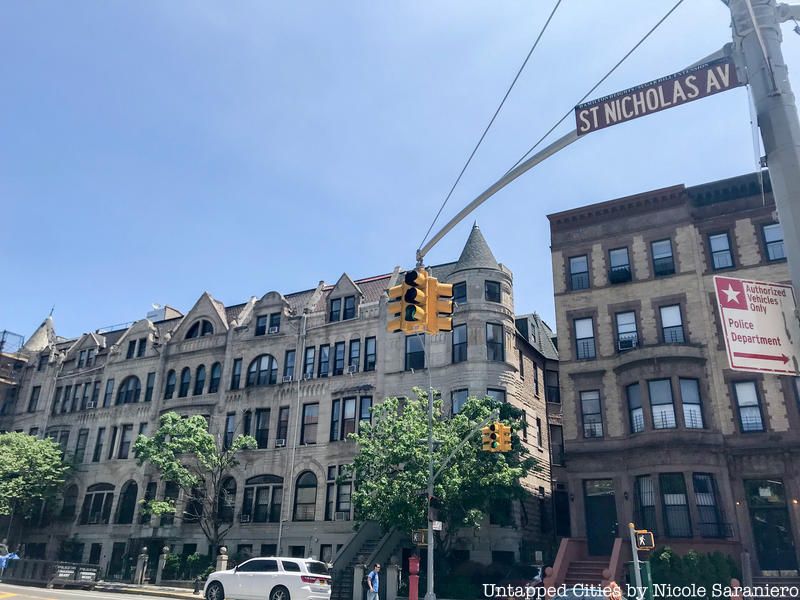
The name has changed several times over the years. During colonial times and up until the 19th century, the street was known as Harlem Lane, and was part of the old post road that led from lower Manhattan to the rest of New England, though there were some who called the street Kingsbridge Road instead, since it was used by those who wished to travel north toward the towns of Spuyten Duyvil and Kingsbridge.
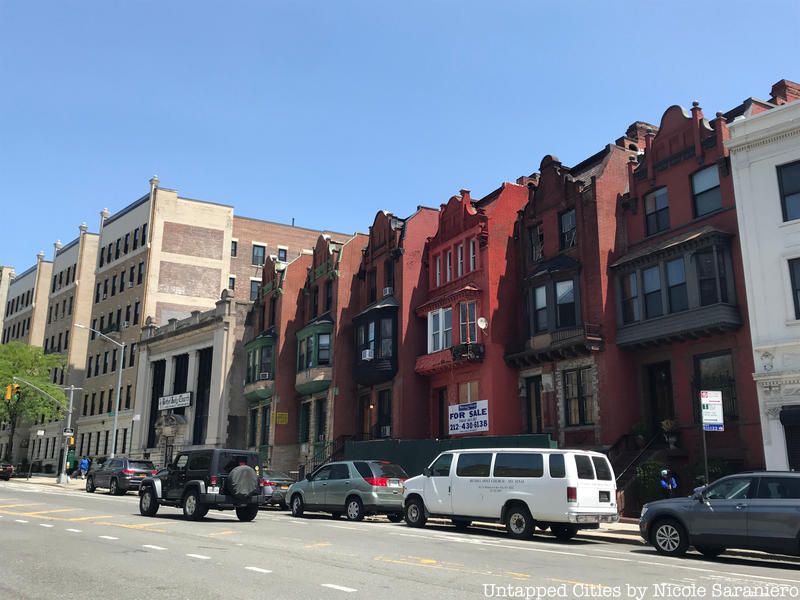
According to a New York Times article, in the 1880s, the street became heavily populated by members of the carriage trade and members of the gentry, who needed just as much stable space as the carriage makers for their horses and rigs. However, this residential popularity trickled away as more and more people abandoned their buggies for automobiles, and eventually the castle-like private homes that lined the street were converted to SROs and small apartment complexes.
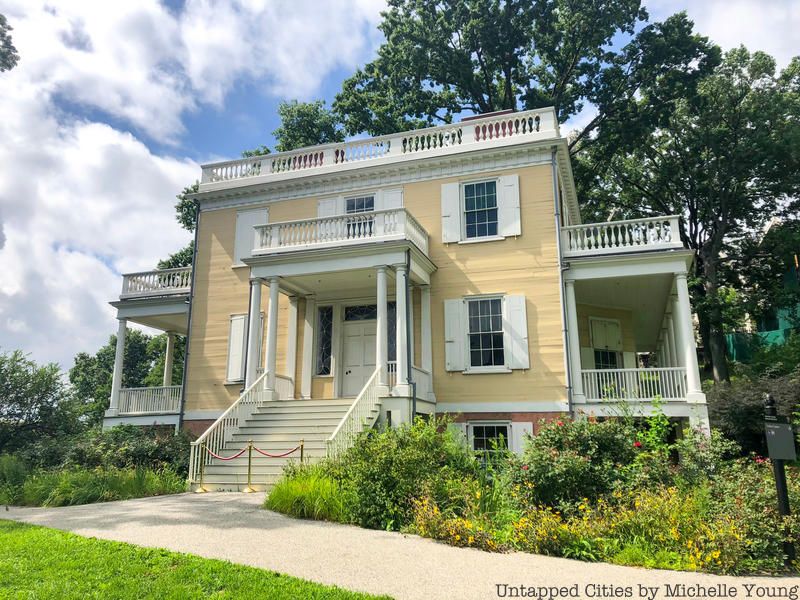
Hamilton Grange
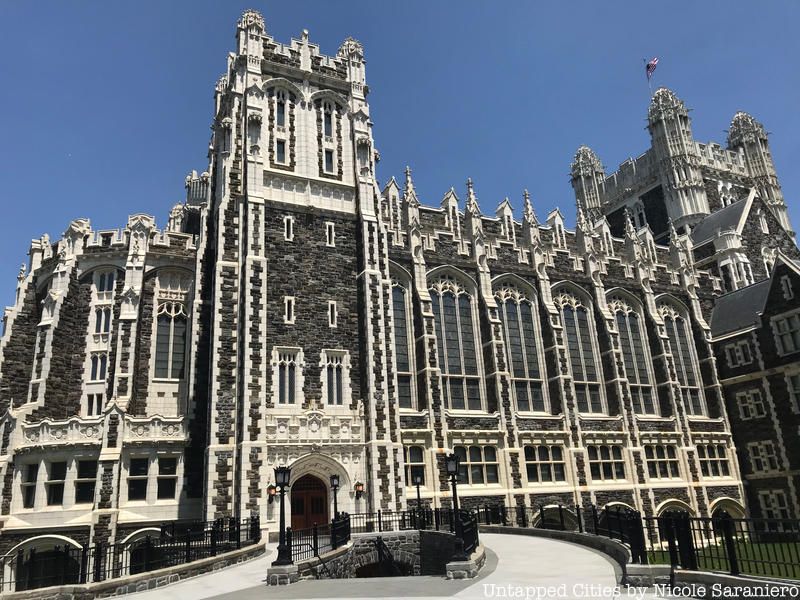
Today, the street offers much in the way of landmarks; there’s the beautiful main campus building of the City College of the City University of New York (CUNY); there’s the Hamilton Grange National Memorial, Alexander Hamilton’s country home that sits on W. 141st Street; and finally St. Nicholas Park, which sits on St. Nicholas Terrace.
The park itself is probably the most interesting of these landmarks. Built in 1906 by Samuel Parsons, Jr., an associate of Calvert Vaux, one of the designers behind Central Park, Morningside Park, and Prospect Park, St. Nicholas Park is situated in a naturally craggy terrain, and saw action during the American Revolutionary War as the primary location of the Battle of Harlem Heights, Washington’s first battlefield victory of the war. In fact, the park’s rocky southern-most point, known as the “Point of Rocks,” served as a military campground for Washington’s men before the battle.
So, the next time you find yourself up in Harlem on St. Nicholas Avenue, you might try picturing a fleet of horse drawn sleighs cutting through a thick winter snow instead of thinking of Santa Claus in his magical airborne sleigh. Or you could pay St. Nicholas Park a visit, salute George Washington at the Point of Rocks and wander over to Alexander Hamilton’s house.
Get in touch with the author @kellitrapnell.

Subscribe to our free newsletters
Free Newsletters
Get the best stories and things to do sent straight to your inbox.
