The invasion of Manhattan nearly ended the American Revolution, but few know it happened. Explore the NYC site of this pivotal moment as we celebrate America 250.
The British invasion of Manhattan didn't stop at Kip's Bay, but continued north into present-day Central Park. For America 250, explore this forgotten battlefield.
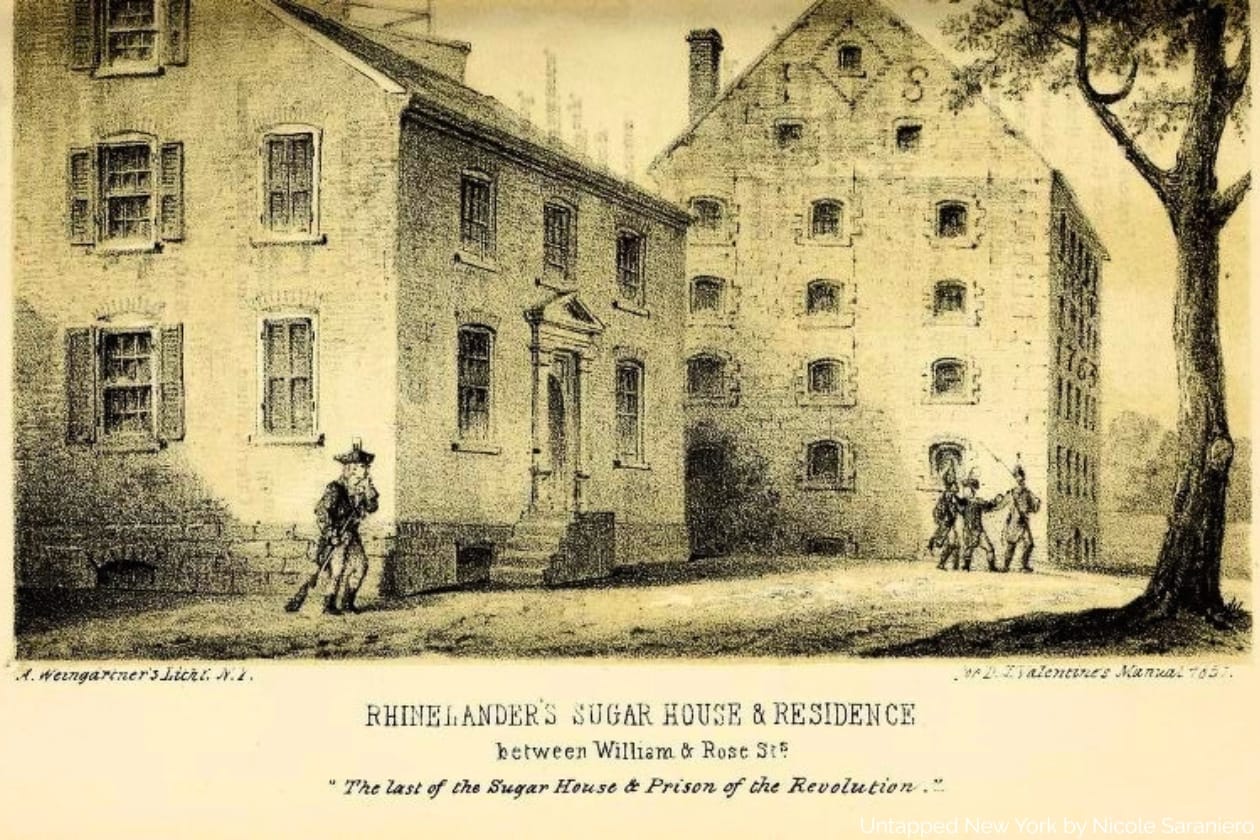
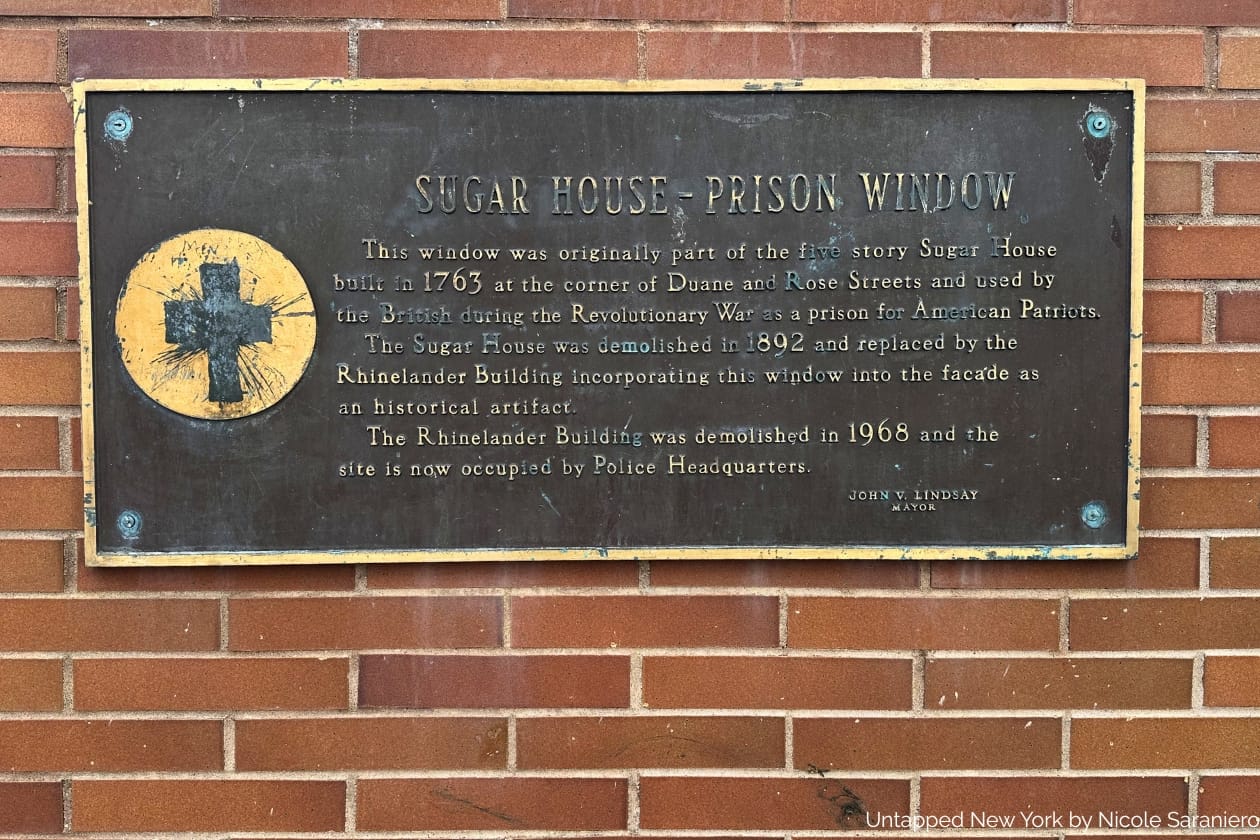
Every day, New Yorkers pass a relic of the Revolutionary War without giving it a second glance. On Duane Street, embedded a wall near the NYPD Headquarters and Brooklyn Bridge–City Hall/Chambers Street subway station, steps away from the Manhattan Municipal Building, there is window from a sugar warehouse that dates back to 1763. The window is a vestige of the Rhinelander (originally Cuyler) Sugar House, which some believe was used as a prison during the British occupation of New York from 1776 to 1783.
There is some controversy over this widely accepted story though. In his book Forgotten Patriots, Brooklyn College professor Edwin G. Burrows found evidence that Cuyler, the owner of the refinery, “was a Tory, and his refinery appears to have continued to operate during the occupation.” If Burrows is correct, the plaque here joins the long list of incorrect historical plaques in New York City.
Manual of the Corporation of the City of New York, 1857, via Internet Archive
Regardless, the memorial stands testament to the brutality suffered by American revolutionary prisoners at the hands of the British during the war. The more infamous Livingston sugar house on Liberty Street housed up to 500 prisoners, according to this harrowing first-person account by Levi Howard, printed in The New York Times in 1852. More than twice the number of deaths occurred in sugar houses and on prison ships than on the battlefield during the American Revolution. The Prison Ship Martyrs Monument in Fort Greene Park is perhaps the most famous memorial to these victims.
Grant Thorburn, a Scottish immigrant, lamented upon the demolition of the Liberty Street Sugar House in 1840 that “it is probable that in the year two thousand and twenty-one there will not be found a man in New-York who can point out the site whereon stood a prison whose history is so feelingly connected with our revolutionary traditions.” [from Forgotten Patriots]
After the war, the Rhinelander Sugar House fell into disrepair and people believed it to be haunted. The Rhinelander Building replaced the sugar house in 1892, until it was demolished in 1968 to become what is now the NYPD headquarters site. The window was left intact both times for preservation, offering New Yorkers a remnant of the Revolutionary War.
💡
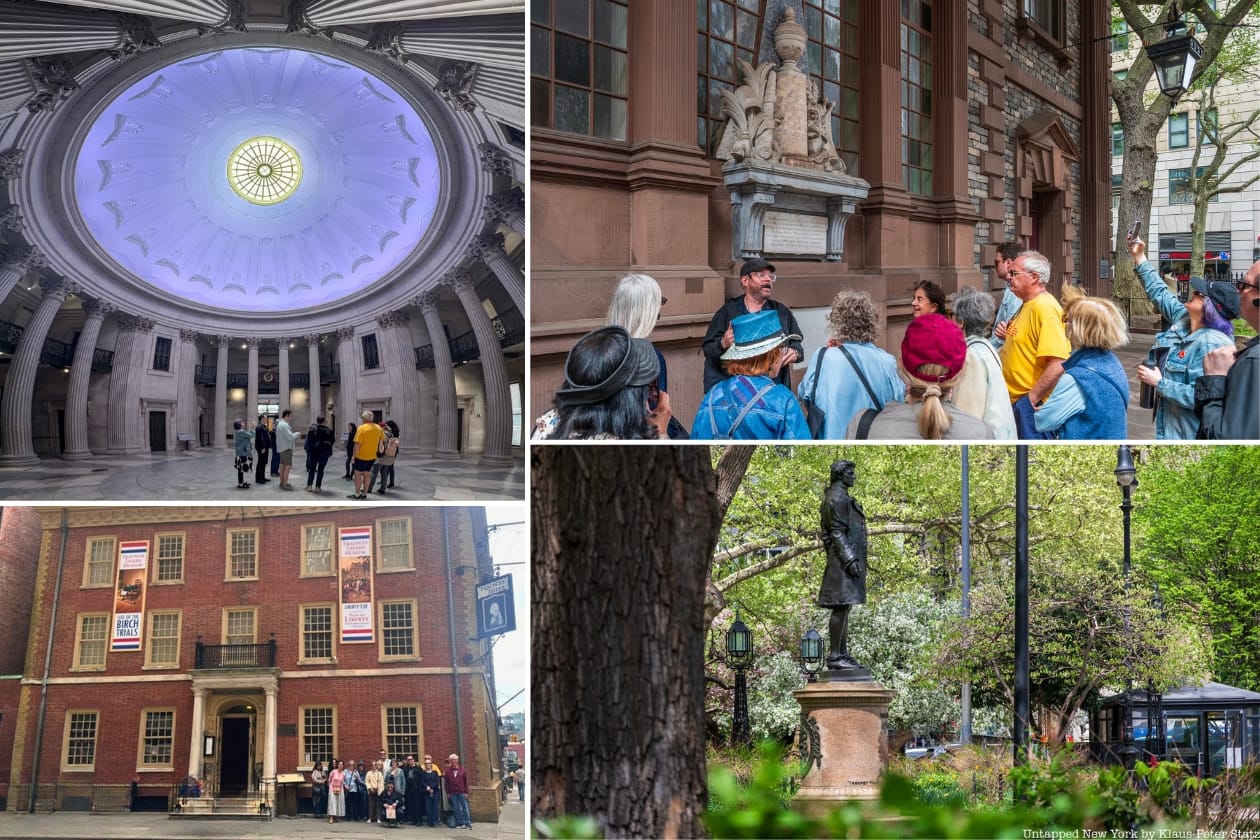
You can see this relic of the Revolution on our NYC Spies of the American Revolution Walking Tour, and uncover more relics on our limited-run America 250 experiences.
NYC Spies of the American Revolution Tour
Multiple Dates: Walk in the footsteps of George Washington's spy ring as you explore revolutionary sites across Lower Manhattan.
🎟️ Includes admission to the Fraunces Tavern Museum ⭐ FREE for Untapped New York Insiders. Members book here.
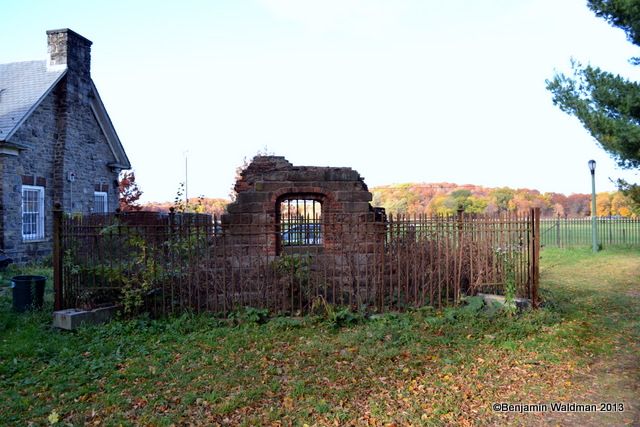
Interestingly, another window from the Rhinelander Sugar House was relocated to Van Cortlandt Park where it currently stands as a memorial. The Van Cortlandt sugar house, which was demolished in 1852, is also believed to have been used as a prison. Columns from the Rhinelander Building stand in a public area on Madison Street.