

05/21/13 1:00pm
Ellis Island Southside Hospital

Ellis Island Southside Hospital

We love hearing from readers in our Untapped Mailbag, especially when they have questions like, “Where can I film a TV show with an apocalypse v. man story line?” In our answer, here’s a sampling of the spots we suggested:

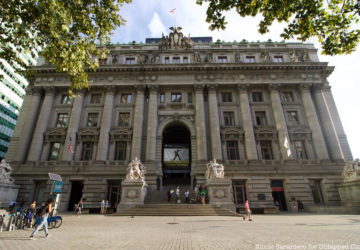
Ellis Island Southside Hospitals: There isn’t much creepier than an abandoned hospital. This one has old incinerators, medicinal bottles, surgical wards and more.

Fort Totten: This Civil War fort is particularly apocalyptic for the inscriptions soldiers carved into the walls while stationed here.

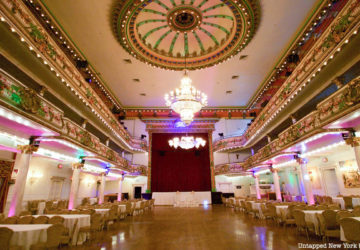
Harlem Renaissance Ballroom: For an epic space where “Most of the windows are boarded up, but light finds its way through a caved-in ceiling, exposing the diaphanous remnants of a golden age—colored light bulbs still lodged in the nightclub’s chandeliers, seat numbers pinned in the balcony.” [Abandoned NYC]

Creedmoor Psychiatric Center: Once a facility for the mentally ill, Building 25 in Creedmoor Psychiatric Center in Queens is now home to tons and tons of pigeon poop that has accumulated over the years. Fake blood adorns some of the furniture as an added bonus.

Gowanus Batcave: Harder to access these days, but if it hasn’t been gutted yet there are still remnants of belongings to former residents of this power plant.

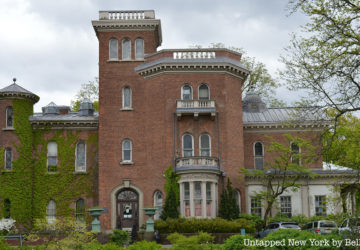
Smallpox Castle on Roosevelt Island: For a location that has a stunning backdrop of New York City and Queens (that will need to be photoshopped to look abandoned of course), the Smallpox Castle at the beginning of the new Four Freedoms Park is appropriately masked with foliate.

Kullman Diner on the West Side Highway: You’d have to partially recreate the interior because in the last few years, vandals have laid waste to the inside, but this mini diner has a claustrophobic vibe from being wedged in on both sides by buildings.

Staten Island Farm Colony: For a more rustic look, this facility for the poor, infirm, mentally ill, and developmentally disabled, is one of many during built during the 19th century.

City Hall Subway Station: Though not “abandoned,” this beautifully preserved subway station below City Hall would make a stunning backdrop. Imagine adding cobwebs and more to the candelabras!

Want us to track down an obscure piece of history? Or just want to share something awesome about your city? Write to us at info@untappedcities.com or through our contact page.

05/14/13 9:00am
Batceiling

Gowanus Batcave Ceiling

Each week, we’ll feature one of our popular lists on Foursquare (or exciting additions to them). Check out our Foursquare page and follow us for tips on the go and download the app.

Our most popular list on Foursquare is our Abandoned NYC list. These are Untapped Cities’ favorite abandoned spots in NYC. Some are break-in-able, some open to the public, some only for the intrepid. Currently with 28 locations (we add to it regularly), it features some great summer escapes like Fort Totten, Dead Horse Bay and Bannerman’s Island. Some places are harder to access, like Glenwood Power Plant and the Gowanus Batcave (both of which have recently been closed off for gutting/renovation, North Brother Island, and some of the abandoned theaters.

(more…)

02/14/13 8:54am
Main Display Cabinet

Main Display Cabinet at the Morbid Anatomy Library

After visiting the Morbid Anatomy Library, part of Brooklyn’s interdisciplinary Proteus Gowanus Gallery, you are likely to feel haunted. I personally woke with my brow damp and my heart hammering, the memory of a black-and-white photograph depicting a dead baby clinging to my waking moments like residue. However, I promise you terror is far from the only emotional response the experience will elicit. After all, the Morbid Anatomy Library’s raison d’être is to showcase the curious intersection between beauty and death. Amidst the collection, there is much to be had of both. (more…)

12/04/12 9:21am

Introducing our new column  Abandoned NYC  by Will Ellis, a NYC-based photographer, filmmaker and educator, who has been documenting the abandoned places and forgotten histories from across the five boroughs on his website  Abandoned NYC.

The Abandoned Gowanus Batcave

Not long ago, a pack of teenage runaways lived the dream in the infamous Gowanus Batcave, shacking up rent-free in an abandoned MTA powerhouse on the shore of the notoriously toxic Gowanus Canal. Out of the grime, in back rooms and crooked halls, the artifacts of this sizable squatter settlement remain to enlighten, amuse, and unnerve the intrepid few that enter the disreputable interior.

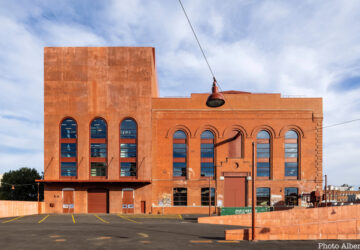
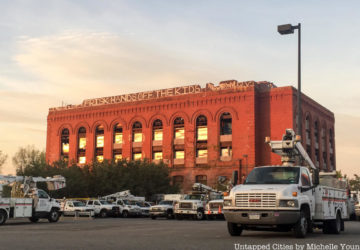
The aimless individuals who lived here may have recognized themselves in the old Central Power Station of the Brooklyn Rapid Transit Company, which had long since been cast aside by society, ceasing to be useful but retaining a proud exterior.  Built in 1896 to serve a rapidly expanding subway system in the outer boroughs, its position on the banks of the Gowanus ensured an efficient intake of coal to power its arsenal of 32 boilers, which supplied eight 4,000 horsepower steam engine driven generators. The station’s technology couldn’t keep up with the times, and after a brief second life as a paper recycling plant, the powerhouse was abandoned. Today, it’s more commonly known as the “Batcave,” supposedly named for the creatures that once congregated in its broken-down ceiling.

In the early 2000s, a colony of homeless young people settled inside the building, establishing a thriving, peaceable community. At onset, the squat held a positive reputation, kept under the watchful eye of a few individuals who ensured hard drugs and detrimental criminal activities were kept out. After a drunken rooftop incident, authorities were notified and made their first attempt to evict the punk-rock squatters, leaving the colony without its guardians.

An arched motif can be found throughout the Gowanus Batcave, here it’s painted in a ground floor nook.

Over the next two years, heroine use and overdose grew rampant, and a wave of brutality overwhelmed the Gowanus Batcave. Drug-induced violence culminated in a series of nightmarish events; one homeless man was thrown from a window, another overdosed and was left on the street for law enforcement to find. Frightened community members saw to it that the Batcave colony was ousted indefinitely in 2006.

Long Gone

The residents are long gone, but most of their humble furnishings remain. Some living quarters, fashioned in old corner offices of the power plant, are generously sized, complete with beds, bookshelves, and lounge chairs. Others are no larger than a closet; album covers, skulls and superheroes, and a general state of chaos are prominent features of these impromptu bedrooms.

The most well-furnished room, complete with a beer can candle holder.

There’s an aspect of immediate inhabitance””something in the disarray of bedding or the position of a candy wrapper””that often had me looking over my shoulder, half expecting to come face to face with a current resident.  But only their objects remained to tell their stories, late nights blurred seamlessly into late mornings, seasons squandered in cheap beer and rolled cigarettes.

A homemade headboard leans precariously on the lower level.

Prized possessions””a VHS copy of the Nightmare Before Christmas, a dogeared paperback edition of Hamlet””molder in the damp with shampoo bottles, plastic toys, and stockpiles of hypodermic needles. Stuffed animals are the most abundant, and telling artifacts. Once treasured, these hulking teddy bears, leather-clad Elmo dolls, and freaky Fisher-Price robots lie mired in filth, decapitated or gutted and hung from strings.

A squatter’s stuffed bear takes on a sinister countenance.

Gowanus Batcave Debris, including a plastic Buzz Lightyear.

While large-scale pieces by notable graffiti artists dominate the main hall of the Gowanus Batcave, the more intriguing artworks can be found on the bedroom walls. Always obscene, typically humorous, and occasionally clever, these amateur scrawls portray a community of fun-loving, hard-living, creative youth, although some inscriptions tend toward the dark and morbid, pointing to a deep resentment for society and obsessions with dying and suicide.

#1 Pizza Junky, Kill Kill Kill

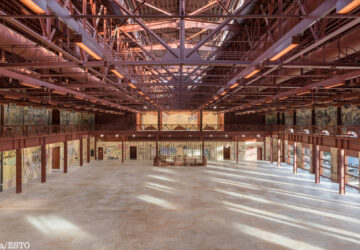
It’s no wonder so many lost souls found solace here””just look up. The Batcave’s eye-popping top floor certainly feels like a sanctuary. Light rain filters down from a collapsed ceiling, atomized to a sweeping mist. In a permanent puddle, arched reflections of the clerestory windows tremble. Pleated ceiling panels once muffled the hum and hiss of a mammoth industrial undertaking, but their effect is more visual now. Interweaving supports shimmer like the facets of a diamond as you move through the space””it’s a crustpunk kaleidoscope that constitutes one of the most spectacular abandoned sights in New York City.

The Turbine Room.

A folding chair gives a sense of scale to the Batcave’s colossal top floor.

For all the atmosphere of grime and decay, the Gowanus Batcave gives an impression of a living space that, though not well kept, was certainly well loved. It isn’t difficult to imagine a time when this damp industrial shell was filled with warmth and welcome, or to imagine its occupants, in those first idyllic months, brimming with a sense of ownership and control, invulnerable to the pressures of parents and policemen, finally at home in a hangout.

Pallets laid out in a flooded entrance to a second-floor squat.

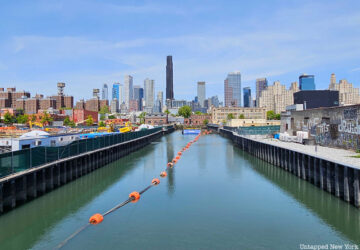
The fate of the Batcave lies in the balance of Gowanus’ contentious transition from industrial wasteland to trendy residential neighborhood. Numerous plans have emerged for the development of the property, but the canal’s recent Superfund designation and an uncertain future for the game-changing Whole Foods development across the street has deterred potential investors from shelling out the millions necessary to renovate the structure and rehabilitate its environmentally hazardous grounds.

The threat of condo developments and rent hikes looms heavy over the murky green waters of the Gowanus, but for now, the Batcave’s exquisite decay progresses uninterruptedly. Through an overgrown lot in the height of Spring, the dilapidated redbrick facade remains a sight to behold, concealing a sordid wonderland within, marking the spot where a youthful dream lived, and died.

The Batcave Lot

A sapling grows from the Batcave’s exterior.

For more photos of the Gowanus Batcave, and to view more of abandoned New York City, visit Will Ellis’  abandonednyc.com.

11/12/12 11:37am

MONDAY, NOVEMBER 12: First Person Plural Harlem reading featuring Phillip Lopate, Jacqueline Jones LaMon, Marie Myung-Ok Lee, and a dance performance by Ashley Byler. Phillip Lopate is a legend of literary nonfiction. Jacqueline Jones LaMon, head of creative writing at Adelphi, has a powerful book of poems about missing black children (“Last Seen”). You may know author Marie Myung-Ok Lee from her contributions to the NYT, Salon.com, and The Atlantic, where she often writes about raising her autistic son. And dancer/choreographer, Ashley Byler, will open the show with a performance that combines Beyonce and a modernist classic. 7-8:30pm at The Shrine, 2271 Adam Clayton Powell Jr. Blvd. FREE, but accepting donations for Hurricane Sandy relief.

TUESDAY, NOVEMBER 13: R 20th Century is pleased to announce the first solo exhibition of new work by David Wiseman, curated by Rodman Primack. The exhibition will be accompanied by a monograph featuring works shown as well as Wiseman’s process and inspiration. David Wiseman captures and preserves the fleeting beauty of natural forms such as a blossoming tree, a spiderweb, or a glacier in his limited edition objects and unique commissions. He imparts this permanence through his expertise with materials and processes. 6-8pm at R Gallery, 82 Franklin Street. FREE.

WEDNESDAY, NOVEMBER 14: Columbia University Graduate School of Architecture Planning and Preservation and the Arthur Ross Architecture Gallery present No Longer Art: Salvage Art Institute. Salvage art, a term borrowed from the art insurance lexicon, refers to work removed from art circulation due to accidental damage. Founded by artist Elka Krajewska, the Salvage Art Institute provides a refuge for salvaged artwork while offering a platform for confronting the regulation of its financial, aesthetic and social value. Opening and conversation. 6:30pm at Arthur Ross Architecture Gallery, Buell Hall, Columbia University. FREE.

Also on Wednesday:  The Historic Districts Council’s Fall Film Series is showing Coney Island, an award-winning documentary that delves into the extensive history of this seaside community, from its discovery in the 17th century to its ongoing and sometimes heartbreaking evolution. There will be a discussion following the film. 6pm at the Tribeca Film Center, 375 Greenwich Street. $10 friend/student/senior; $15 non-friend, $20 Coney Island supporter. All proceeds will go to hurricane relief efforts for Coney Island organizations and residents. Buy tickets here.

THURSDAY, NOVEMBER 15: Untapped New York is teaming up with the Vanderbilt Republic to put together a pop-up party to raise money for the Far Rockaway Redevelopment Fund. The Listening is an acoustic listening session and art exhibition featuring Wyatt Gallery’s photos of the aftermath of Hurricane Sandy  curated by Jo-Anneke Van Der Molen. There will be musical performances by Kendra Ross  (8pm), F. Stokes  (8:30pm), Zack Orion  (9pm), and Lívio Almeida  (9:30pm), a silent auction of Wyatt’s photos, discounted drinks and a la carte pork belly & coconut chicken buns by Bite Size Kitchen. 7pm at Gowanus Loft. $30 advance tickets or contribute what you can at the door. Buy tickets here  or rsvp on Facebook. Join us at this party for a worthy cause!

FRIDAY, NOVEMBER 16:  What Wine With Turkey? A blind tasting by Joios and Plate + Decanter. If you’re always wondering what wine to serve at Thanksgiving Dinner, this tasting is for you. They’ll pair 6 wines with turkey served 3 ways and explore how different cuts interact with different wines. You’ll also enjoy skyline views from a west side rooftop while we debate grapes, and meet fellow wine enthusiasts on this quest. 6:30-8:30pm at Archstone Clinton Clubhouse Level, 515 W 52nd Street. $40. Buy tickets here.

SATURDAY, NOVEMBER 17: PowerHouse Arena is hosting a day-long #SandyHatesBooks book fair featuring drinks, music, and some of their favorite authors. If you’d like to help them rebuild and restock and can donate a small amount, your assistance will be dearly appreciated, and they will think of something very nice to do in honoring and celebrating your contribution. 12-9pm at powerHouse Arena, 37 Main Street, DUMBO, Brooklyn. FREE.

SUNDAY, NOVEMBER 18: Underground Eats presents Dinner in SIX ACTS. on Saturday the 17th or Sunday the 18th, join artist and architect Cheryl Wong for a six course meal that incorporates elements of architecture and theater. Building a beautiful plate of food is comparable to designing and building an architectural structure. Theater is both spacial and performative, as are the culinary arts. 6-10pm at CD Cucine Showroom, 227 W 17th Street. $100 includes a 6 course dinner + drinks. Buy tickets here.

11/11/12 1:47pm

THURSDAY, NOVEMBER 15: Untapped New York is teaming up with the Vanderbilt Republic to put together a pop-up party to raise money for the Far Rockaway Redevelopment Fund. The Listening is an acoustic listening session and art exhibition featuring Wyatt Gallery’s photos of the aftermath of Hurricane Sandy  curated by Jo-Anneke Van Der Molen. There will be musical performances by Kendra Ross  (8pm), F. Stokes  (8:30pm), Zack Orion  (9pm), and Là­vio Almeida  (9:30pm), a silent auction of Wyatt’s photos, discounted drinks and a la carte pork belly & coconut chicken buns by Bite Size Kitchen. 7pm at Gowanus Loft. $30 advance tickets or contribute what you can at the door. Buy tickets here  or rsvp on Facebook. Join us at this party for a worthy cause on Thursday!

Wyatt Gallery is an award-winning documentary photographer and recipient of the Fulbright Fellowship, the PDN 30, and numerous other awards and grants. He has been out on the streets documenting the damage done by Hurricane Sandy, meeting people who lost their homes and the volunteers who are pulling the City back together.

The Vanderbilt Republic are the masterminds behind “Art From the Heart,” a pop-up collective of artists.