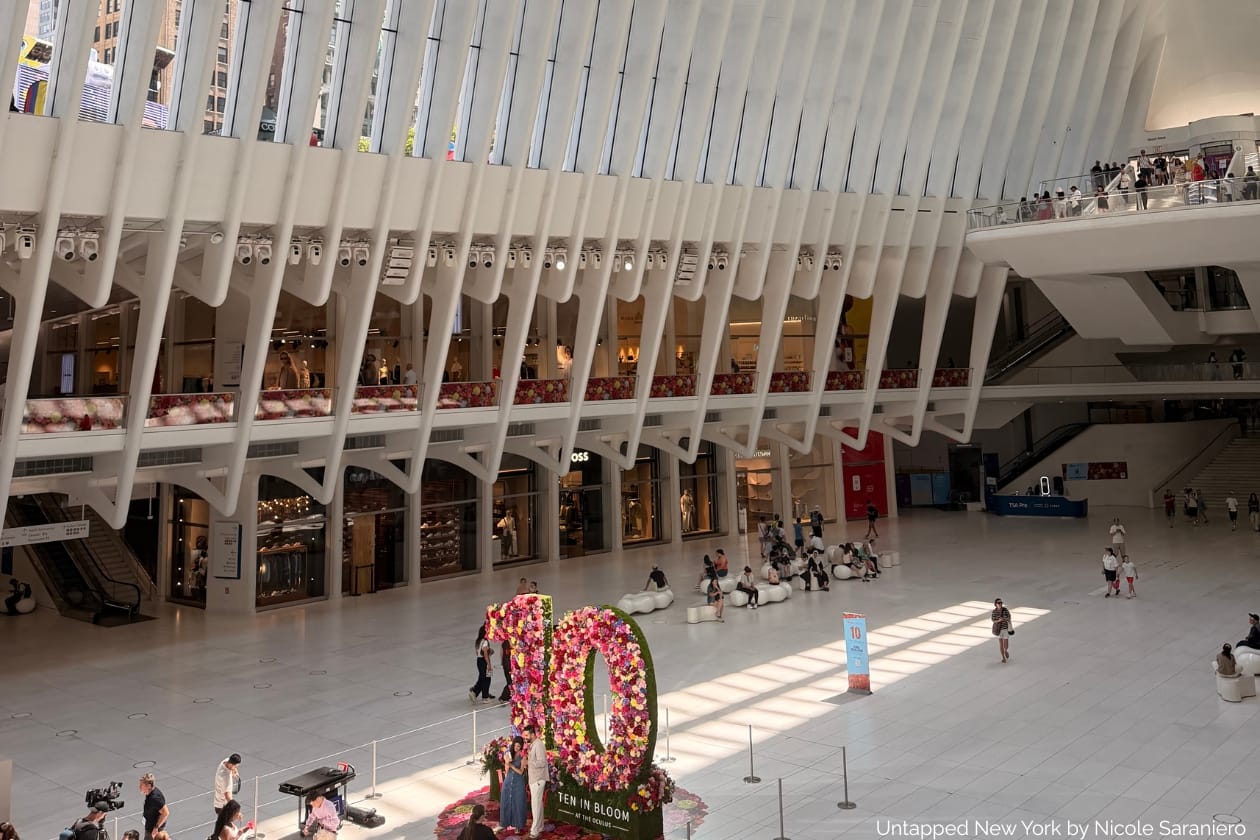
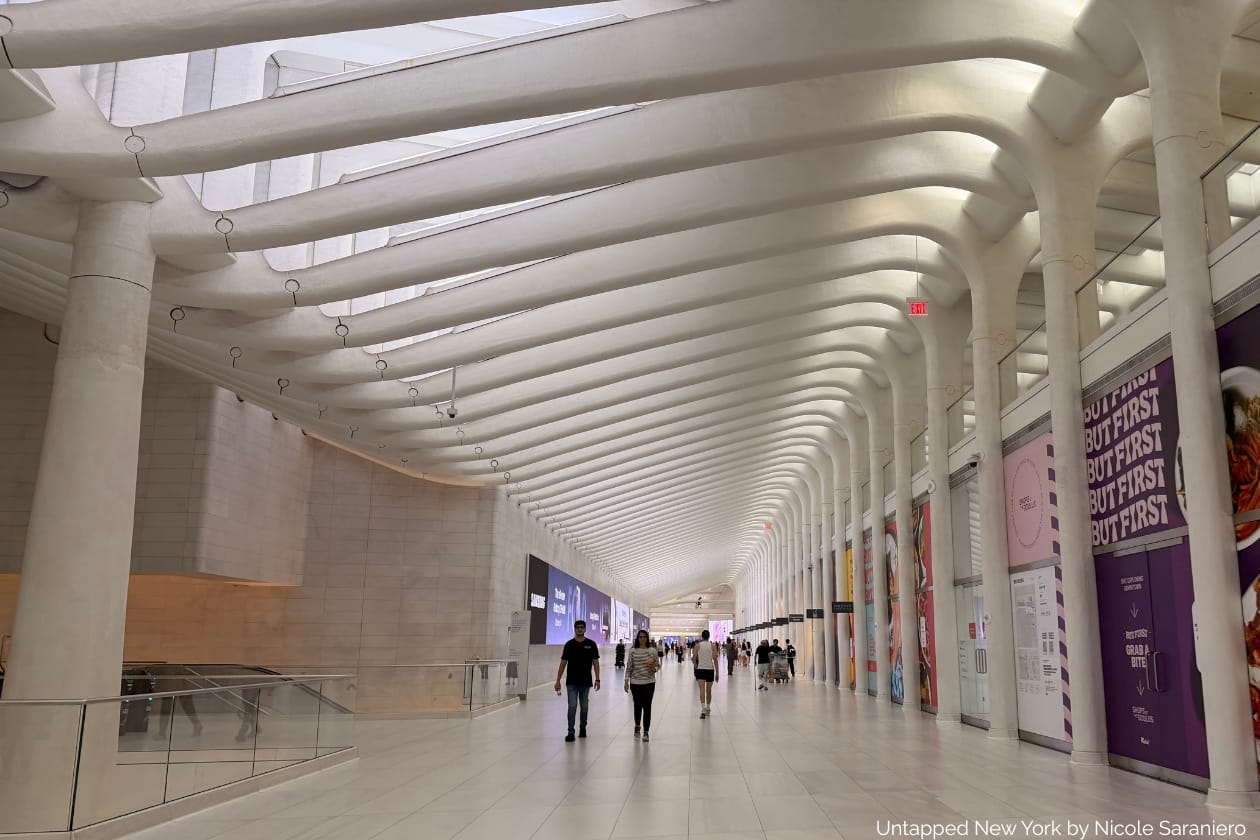
1. Remnants of the Original Twin Towers Are Visible Within the Oculus
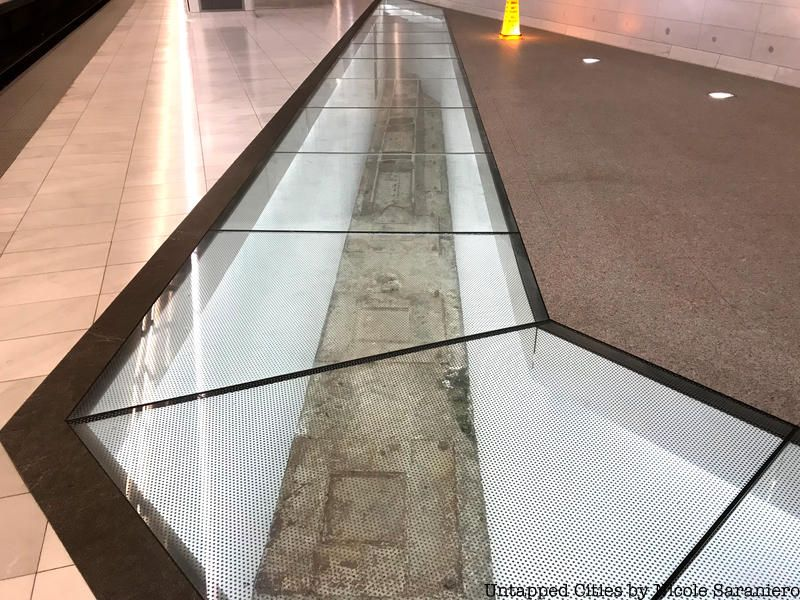
A variety of pieces of the original World Trade Center can be found in the transportation hub. At the PATH Station, the floor contains a glass cutout on the floor through which you can see sections of the original steel framework and concrete foundation of the Twin Towers.
Over at the C, E subway stop, subway riders will pass through part of the original 1970s subway concourse, with travertine floors, vintage signage, and a poignant reminder of the tragic events of 9/11. One of the doors, now encased in a protective glass, still bears bright orange, graffiti-like markings made by search and rescue teams in the immediate aftermath of the 9/11 attacks. Learn more about it here.
A pedestrian hallway within the Oculus, opened to the public in October 2013, traces portions of the World Trade Center Slurry Wall and the Hudson River Bulkhead.
World Trade Center Walking Tour
🗓️ October 11th & 16th at 2 pm ⭐ Free for Insiders & Explorers
Explore the WTC grounds with a longtime docent of the 9/11 Memorial Museum and learn how the site has evolved from before the Twin Towers to the present day.
Photograph Courtesy of Westfield World Trade Center
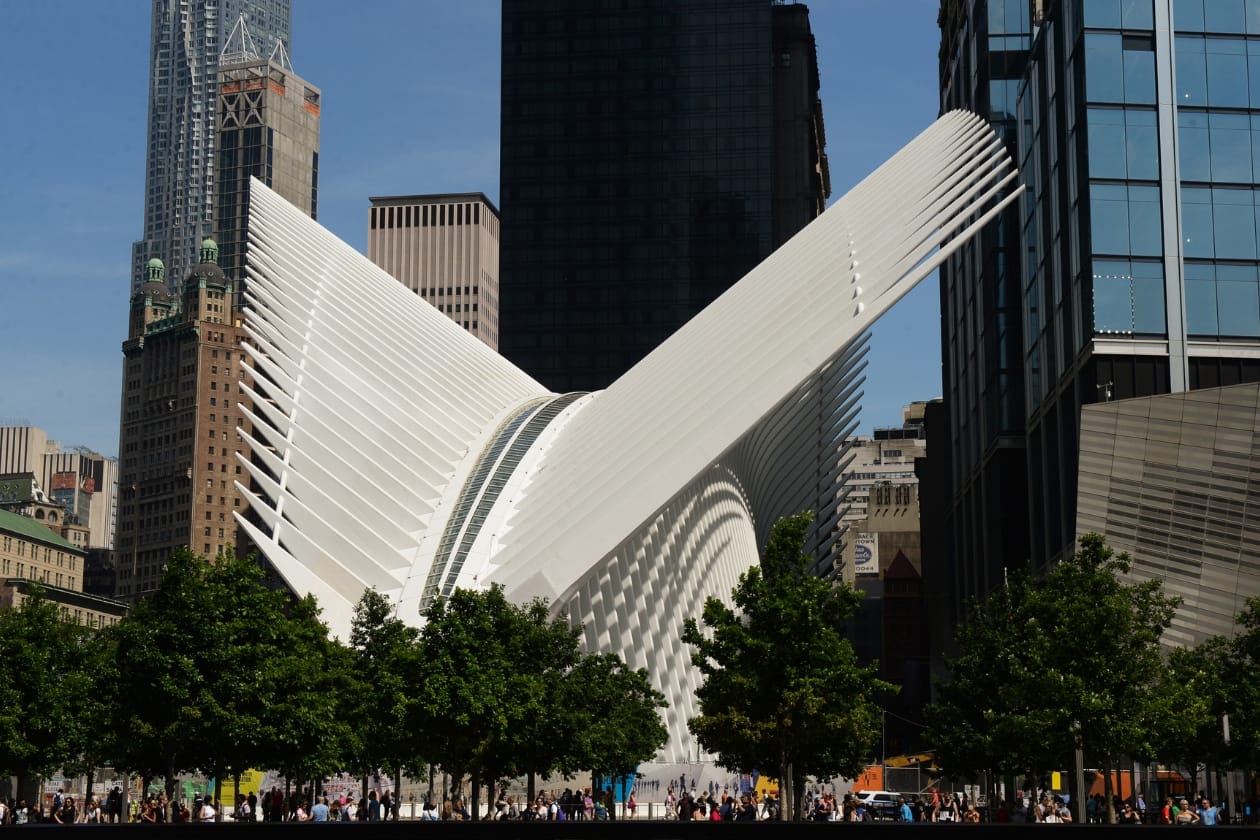
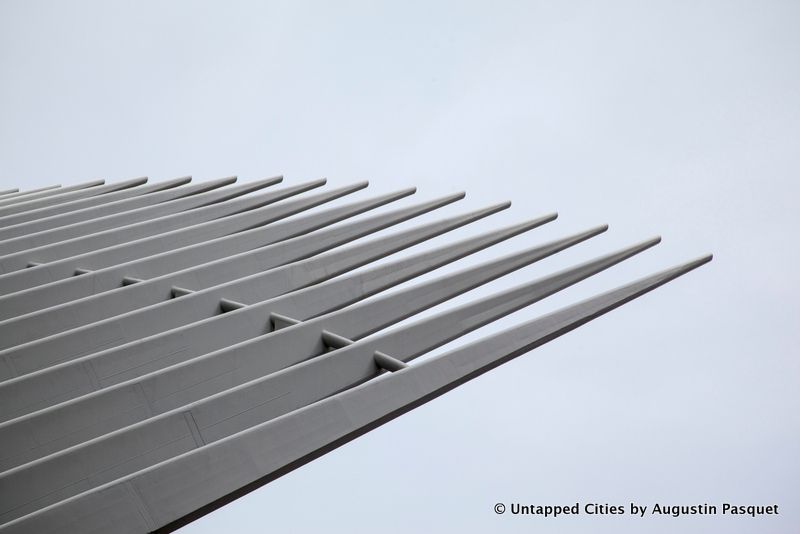
While many opinions have been shared about what the Oculus looks like, Calatrava's original inspiration was the image of a bird being released from a child's hands. This is the imagery that Karrie Jacobs reports Calatrava presented in 2004. It's clear to see Calatrava's vision in the building's outstretched wings.
3. It is the World’s Most Expensive Train Station
Much has been said about the $4 billion price tag, which came out to twice the original budget of $2 billion set in 2004. $1.7 billion came from the Federal Transit Administration and $300 million from the Port Authority.
4. The Steel Used To Make the Oculus Is So Unique, Only Be Four Firms in the World Make It
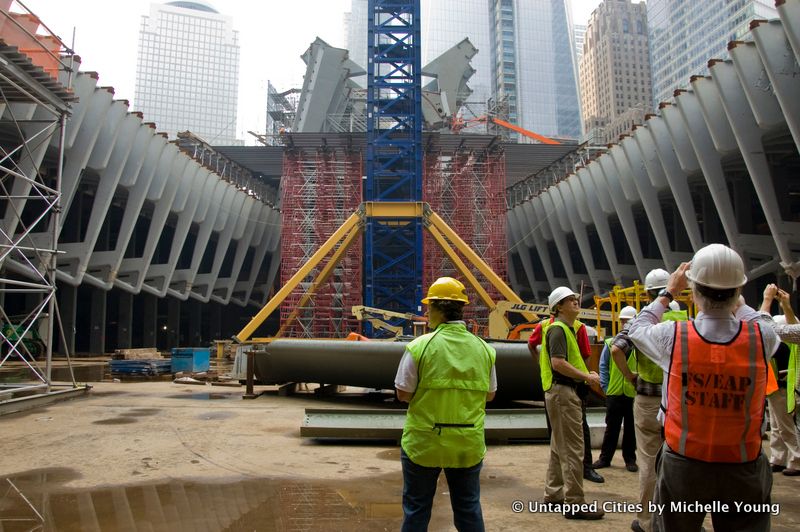
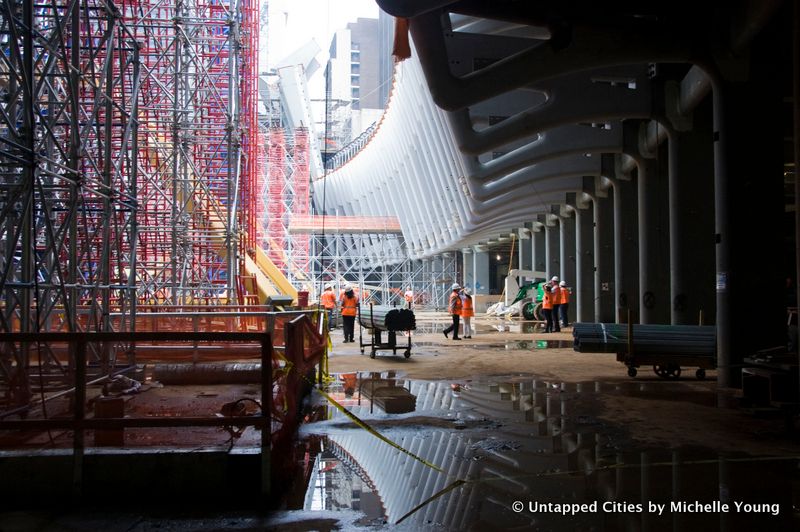
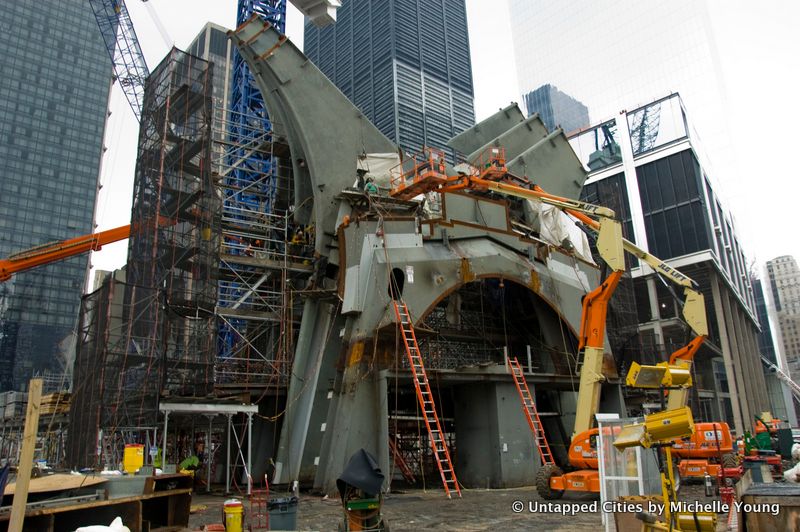
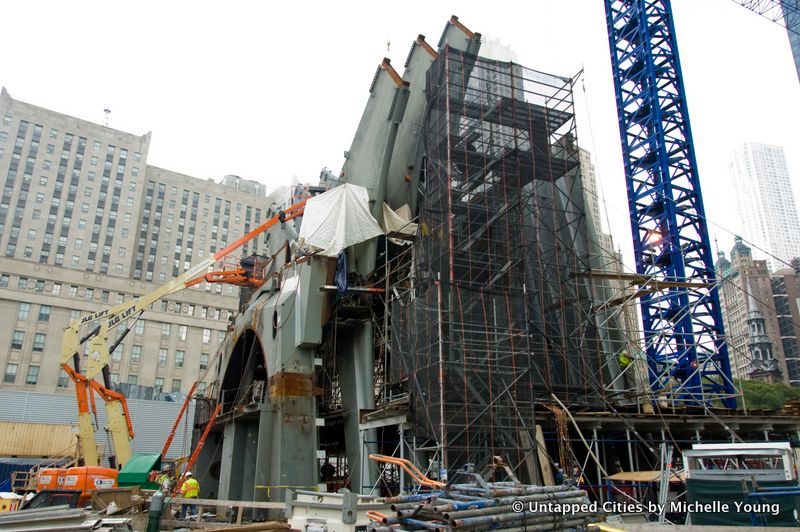
The Oculus under construction
Architect Santiago Calatrava is known for his soaring, bending forms, and only four firms in the world, all located outside the United States, were capable of manufacturing the steel need for his Oculus design. As The New York Times reported, the World Trade Center Hub utilized “sculptural and curvilinear steel elements that could only practicably be manufactured abroad.” One third of the 36,500 tons of steel was made in a northern Italian factory. Another factory was located in Spain. 612,300 hours of work by 140 ironworkers were required to complete the steel work.
The steel was shipped 4,700 miles by boat and brought into New York City through the port at Red Hook. In total, the steel for the station cost $474 million and weighed 36,500 tons. The steel arrived in 588 pieces, which were together piece by piece like a jigsaw puzzle. 2,225 welds hold the whole thing together.
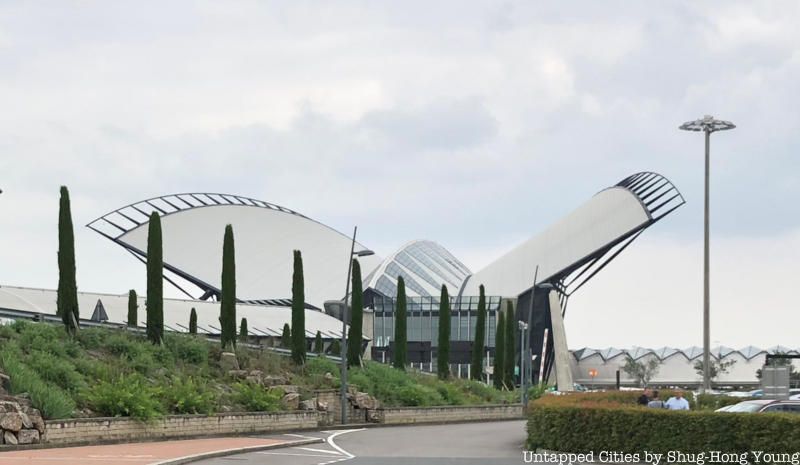
5. The World Trade Center Transportation Hub Looks Strikingly Similar to Calatrava’s Train Station Near Lyon, France
The Gare Saint-Exupéry train station outside Lyon, France was also designed by Santiago Calatrava, and was completed in 1994. It’s a terminal for TGV (high speed) trains and connects the city of Lyon with the airport. It’s design is inspired by the series of “Bird” sculptures by Calatrava and was originally planned for the 1992 Winter Olympics in Albertville.
The Gare Saint-Exupéry is clearly a precursor to the World Trade Center Transportation Hub, which Calatrava also described as bird in flight. The Lyon train station cost 750 million French francs at the time, which would be about 114 million Euros if converted today.
6. Steel for the Oculus Was Transported Over the Manhattan Bridge in the Middle of the Night
Materials for the World Trade Center Transportation Hub were transported by truck over the Manhattan Bridge in the middle of the night. In addition, once the World Trade Center Memorial was in place, cranes could no longer get the necessary “materials and equipment to the hub mezzanine below, so the authority bought 10 flatcars for $3 million and used PATH as a freight railroad,” reported the New York Times. If this sounds odd, the PATH train actually goes through the slurry wall into the World Trade Center bathtub. Many New Yorkers and commuters will remember that for quite a long period after 9/11, the slurry wall was visible to those going in and out of the city on the PATH train.
7. Original Plans Had a Retractable Roof
In a plan the New York Times called “exorbitant,” the roof of the Oculus was originally meant to retract. The two “wings” would have opened up to 50 feet, like a Venus flytrap, and Port Authority officials even went to the Milwaukee Art Museum to see Calatrava’s retractable roof in action there. The idea was nixed, after three years of debate, due to cost-cutting measures but the skylight panels on the spine of the World Trade Center Transportation Hub do retract.
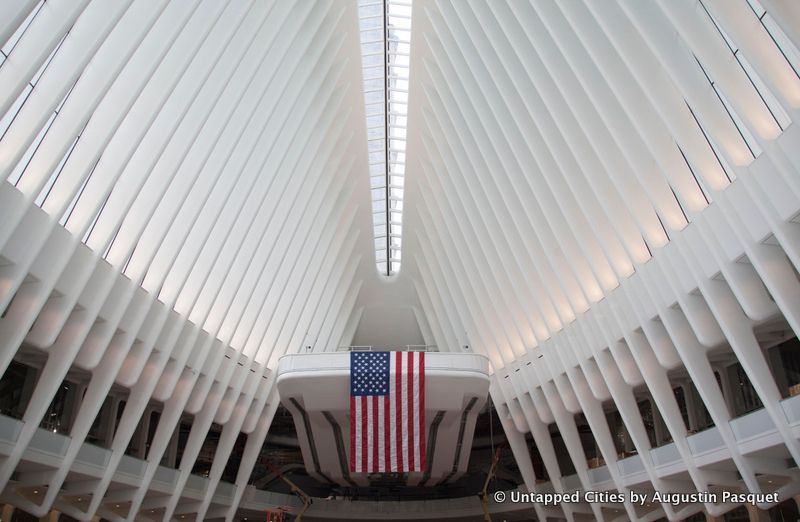
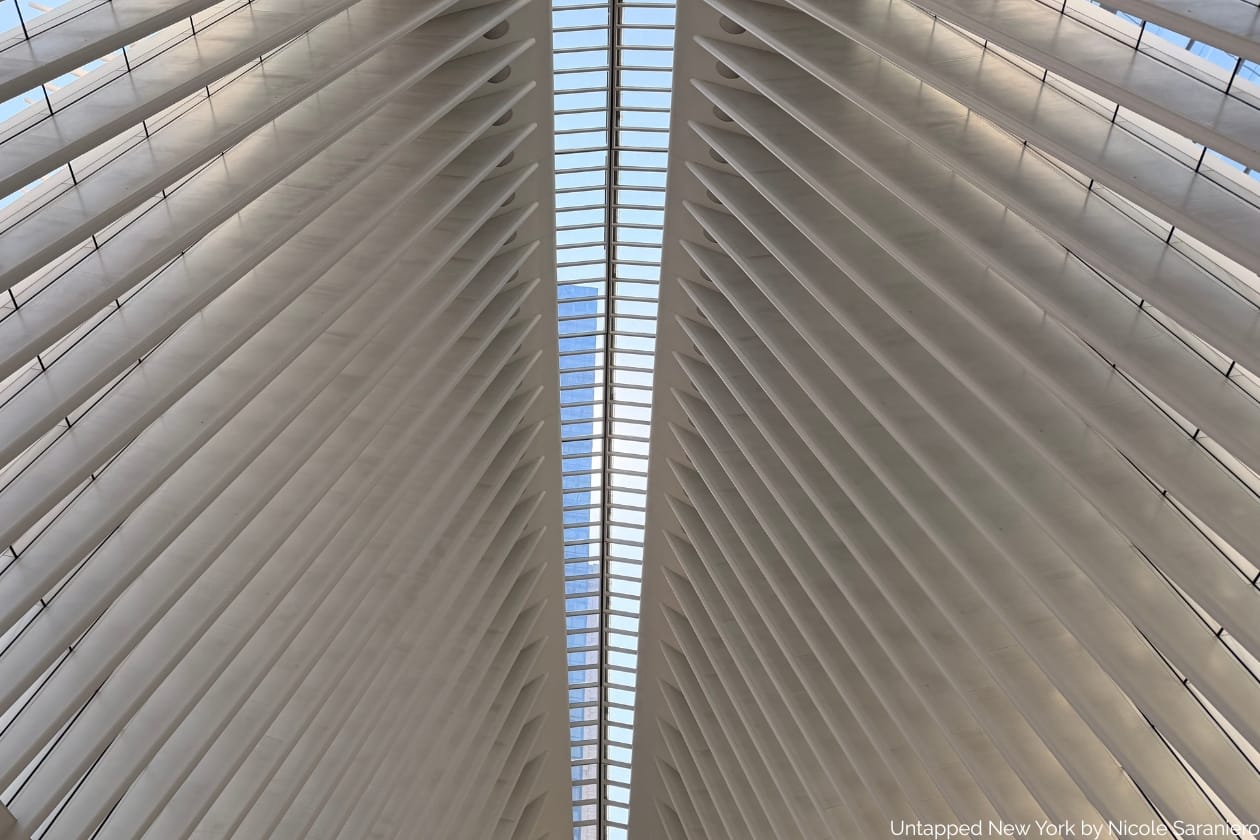
Every September 11th, the orientation of the Oculus' central skylight allows a beam of light to pass through the station and move across the floor between the times when the first plane hit the World Trade Center and the collapse of the second tower in 2001. This intentional phenomenon is called the "Wedge of Light."
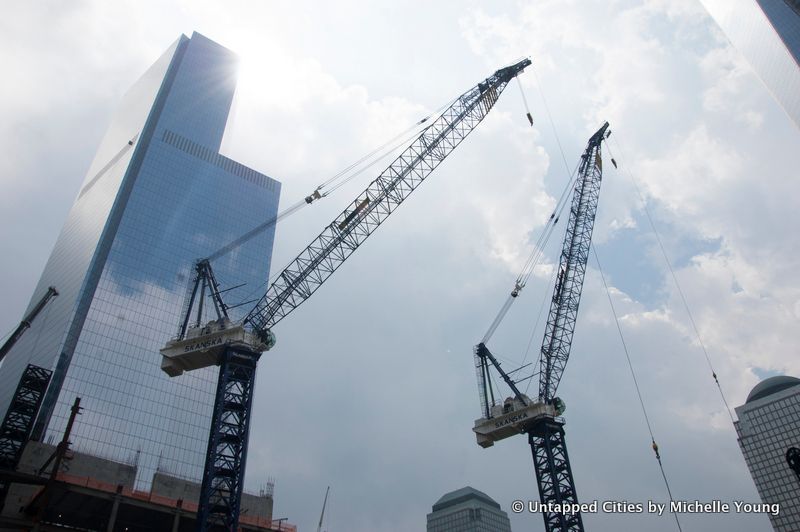
8. Two of the Largest Cranes Ever Used in New York City History Were Employed to Put the Oculus Together
The two Skanska cranes used in the construction of the World Trade Center Transportation Hub were designed specifically for the project, and were the largest ever used in New York City construction. The aerial lifts on the two cranes were 185 feet high.
9. Santiago Calatrava Said He Wanted to Design a Train Station So Simple His Mother Could Navigate It
Santiago Calatrava, who lives in New York City, told Architectural Digest, “I have always said, ‘I will build a station that my mother can find her way around very easily and comfortably.’ Why? Because finding one’s way in a station is essential. The idea of going down into the ground through long escalators, entering dim places, this is our everyday life in New York. But does it have to be so dark? I wanted to create a place that delivers the people a sense of comfort through its orientation, while also delivering a sense of security by opening everything to the naked eye.”
10. Stucco-Like Fire Proof Coats the Steel Beams
From far away, the white “ribs” of the World Trade Center Transportation Hub seem as smooth as marble. But get close and you’ll notice it has a texture to it. This is a fire proof coating that has a stucco-feel. On our visit, people wondered how long the station would remain gleaming white with this type of material in place. In 2014, Mr. Calatrava’s office countered questions on why the surface was bumpy: “The client was not prepared to spend the additional money.”
Michelle is the founder of Untapped New York and the author of The Art Spy: The Extraordinary Untold Tale of WWII Resistance Hero Rose Valland, Secret Brooklyn, Secret New York, and Broadway. michelleyoungwriter.com