


Nikola Tesla is regarded as one of the most important figures of the 19th and 20th centuries. In 1884, a 28-year-old Tesla was hired by Thomas Edison, and moved from his home country in the Austrian Empire (present day Croatia), and would go on to live and work in New York City for 60 years. Tesla was credited with the advancement and creation of a number of important inventions, but unfortunately, others would often be credited for his work. Here is a list of the top 10 places to find Nikola Tesla in New York City.
10. The New Yorker Hotel
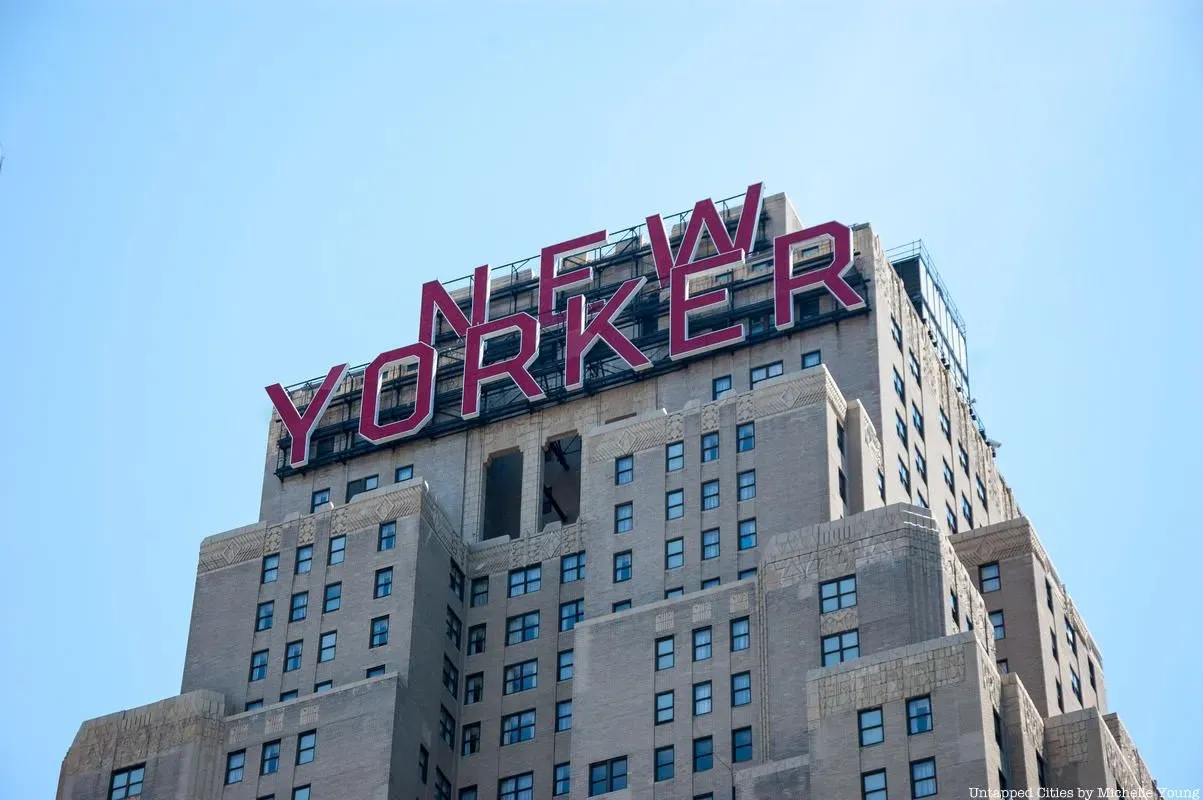
Tesla lived at the New Yorker Hotel for the last decade of his life in rooms 3327 and 3328, which served as his bedroom and study, respectively. Prior to his 10-year long stay at the New Yorker, Tesla lived at the Waldorf-Astoria, where he was known for throwing grand dinners for his friends and acquaintances, including author Mark Twain. Though he enjoyed fame and fortune for most of his life, he spend 1933 to 1943 in debt.
On January 7, 1943, a housekeeper found Tesla dead in his room, after she ignored the “do not disturb” sign on his door. In 2001, the Tesla Memorial Society installed plaques on the outside of the New Yorker and on the doors of his hotel room which list a few of his best-known accomplishments.
9. Delmonico’s
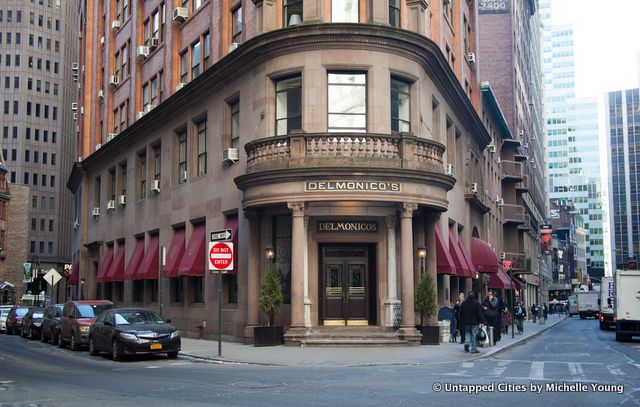
The original chain of Delmonico’s restaurants was owned and operated by the family of the same name during the 19th and early 20th centuries. According to the website Tesla Universe, Tesla”invariably” ate his meals at Delmonico’s and spent time at the café during the evenings. There were Delmonico restaurants across Manhattan including the original and most famous location at 2 South Williams Street. Other famous patrons of the restaurant include J.P. Morgan, Charles Dickens, Arthur Sullivan, Jenny Lind and Theodore Roosevelt.
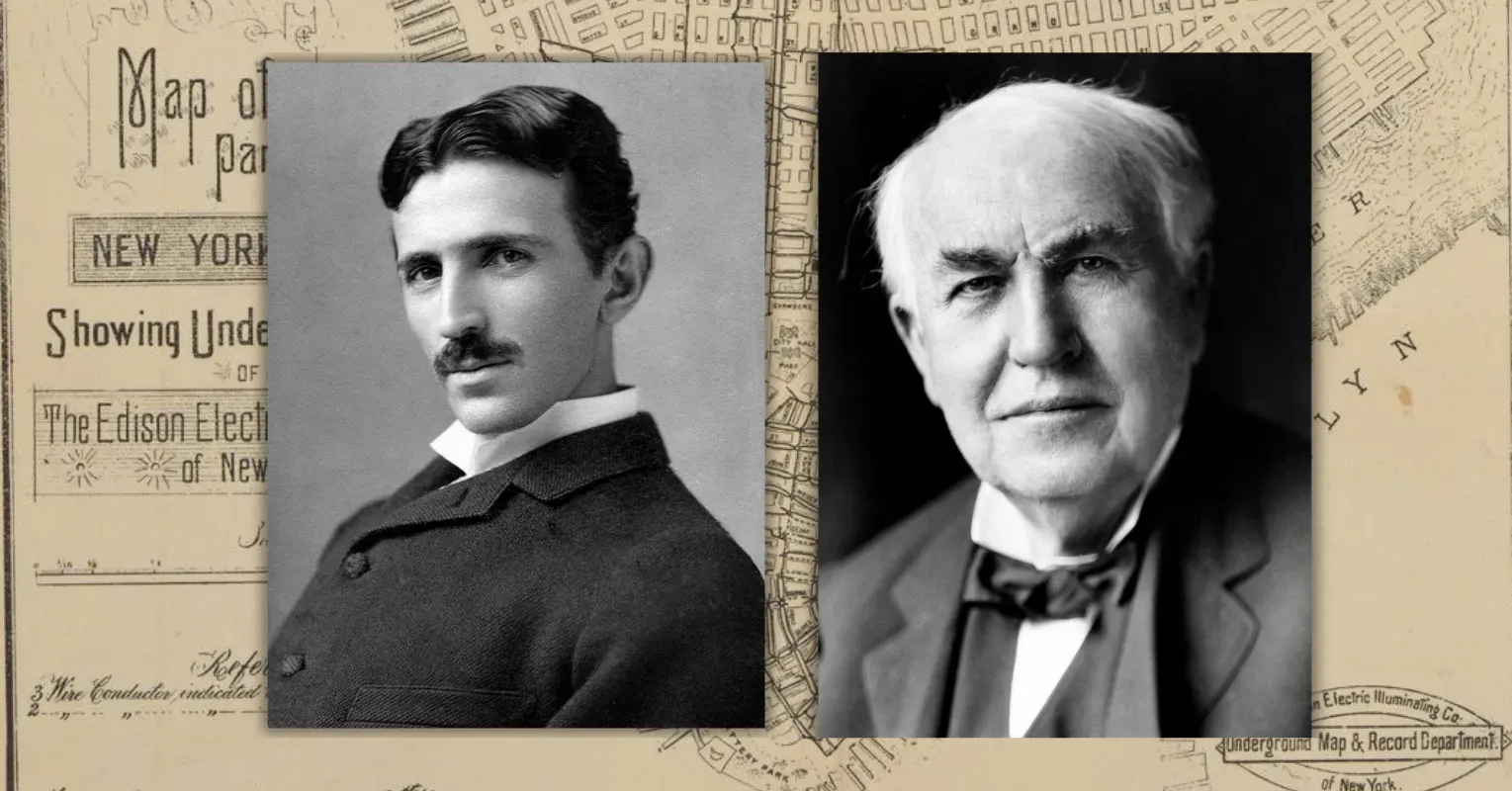
Edison, Tesla & NYC's First Electric Grid Tour
Multiple Dates: Explore the origins of the electric age in Lower Manhattan as you untangle the wires of a notorious feud between Tesla and Edison.
⭐ 50% off for Insider tier members or higher!
8. Nikola Tesla Labs
During his 60 years of working in New York, Tesla moved to a number of laboratories throughout the city. The Gotham Center for New York City History details a number of Tesla’s labs in the article, ‘Places of Invention: Nikola Tesla’s Life in New York.’ While digging ditches for the Western Union Telegraph Company, Tesla grabbed the attention of his supervisor Alfred S. Brown, who introduced him to Charles Peck, a lawyer who sold his Mutual Union Telegraph Company to Jay Gould. Brown and Peck became partners and rented a lab for Tesla in the Financial District at 89 Liberty Street. While at Liberty Street, Tesla perfected the design for his AC motor and earned his first patent.
In 1889, after returning from a brief time in Pittsburgh, Tesla rented a new laboratory at 175 Grand Street, after learning that German physicist Heinrich Hertz had detected radio waves. The discovery excited Tesla and it was at this lab that he created the Tesla coil, a high-voltage, high-frequency transformer.
His next laboratory at 33-35 South Fifth Avenue, which is today LaGuardia Place, was where he completed his most important work on wireless lighting. He gave demonstrations to his friends including famed architect Stanford White and author Mark Twain. But the lab caught on fire in 1895, and he lost all the plans and projects he was working on. Tesla fell into a deep depression, but with the support of his friends and “electroshock treatments from his coils,” he overcame his depression.
In July of the same year, Tesla rented out yet another lab, this time located at 46 East Houston Street. Here he learned about X-rays, developed a radio-controlled boat and worked on a system to transmit power around the world without using wires. This resulted in Tesla building a power station at Wardenclyffe on Long Island.
7. Serbian Orthodox Cathedral of St. Sava
On West 25th Street, situated between Broadway and Avenue of the Americas, is the Serbian Orthodox Cathedral of St Sava. The cathedral was originally built from 1850 to 1855 and was part of the Episcopalian Trinity Chapel Complex that included St. Sava, formerly known as Trinity Chapel, Trinity Chapel School and the Clergy House. The Trinity Chapel Complex was designed by Richard Upjohn, who was also responsible for rebuilding Trinity Church. In 1942, the church was sold to the Serbian Eastern Orthodox Parish, and in 1944 it was renamed the Serbian Orthodox Cathedral of St. Sava.
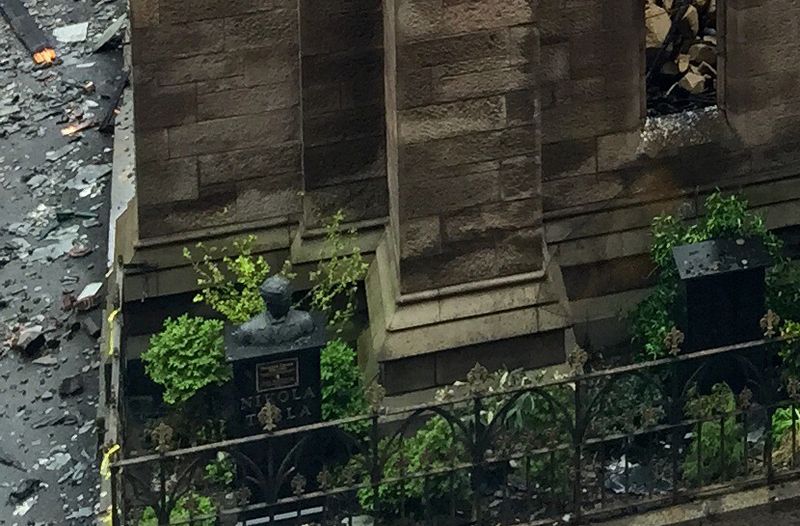
Due to his Serbian heritage, Tesla and his legacy have been strongly connected to St. Sava. In 1993, the cathedral commemorated the 50th anniversary of Tesla’s death and in 2007, a bust designed by Serbian artist, Marina Zivic, was dedicated in his honor. In May 2016, there was a devastating fire at St. Sava, and though the fire destroyed much of the cathedral in its wake, Tesla’s bust remained unscathed.
6. Lecture Hall at the Old Columbia University
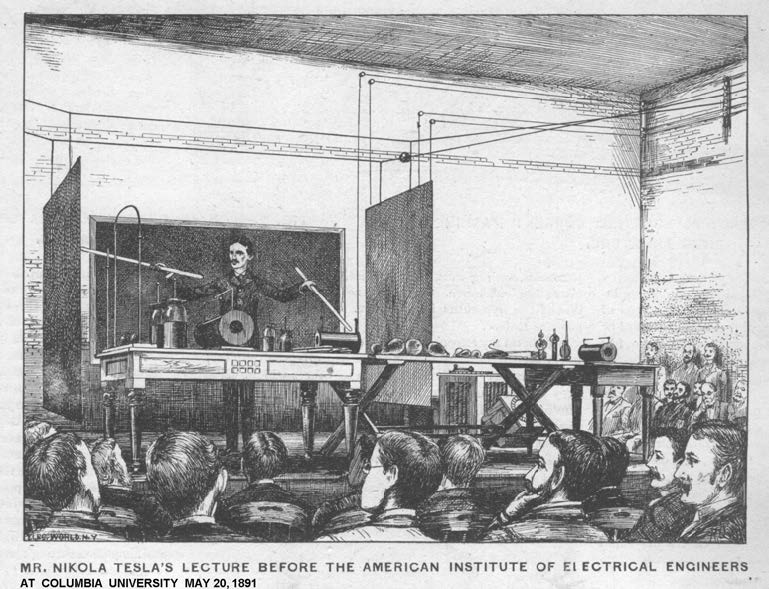

While Tesla worked at his lab at 175 Grand Street, he invented the Tesla coil around the year 1891. That same year, he demonstrated how his newest invention could be used for wireless lighting at the spring meeting of the American Institute of Electrical Engineers. The demonstration took place at Columbia University’s old location at 49th Street between Madison Avenue and Fourth Avenue.
According to the Gotham Center for New York City History, the Tesla coil was connected to two large zinc sheets that was suspended from the ceiling. He then took two long gas-filled tubes and stood between the zinc sheets. He waved the tubes around and they subsequently started to glow due to the electrical field Tesla set up. Although the Columbia University campus moved uptown to its current location at 116th Street and Broadway, Tesla will forever be ingrained in the school’s history.
5. Radio Wave Building
Read the Full Story
This article is available to Supporter tier members and higher. Join for just $5/month to unlock 12,000+ stories about New York City.
Become a Supporter