


New York City’s Presidential Haunts from Washington to Trump
A look at NYC sites associated with presidents from the first to the current!


From its days as the last capital of the United States under the Articles of Confederation and the first capitol under the Constitution, New York City has long been intertwined with the United States Presidency. Presented below are a collection of the City’s presidential haunts, which have seen the birth, life, and death of many of our commanders in chief.
George Washington
Morris Jumel Mansion
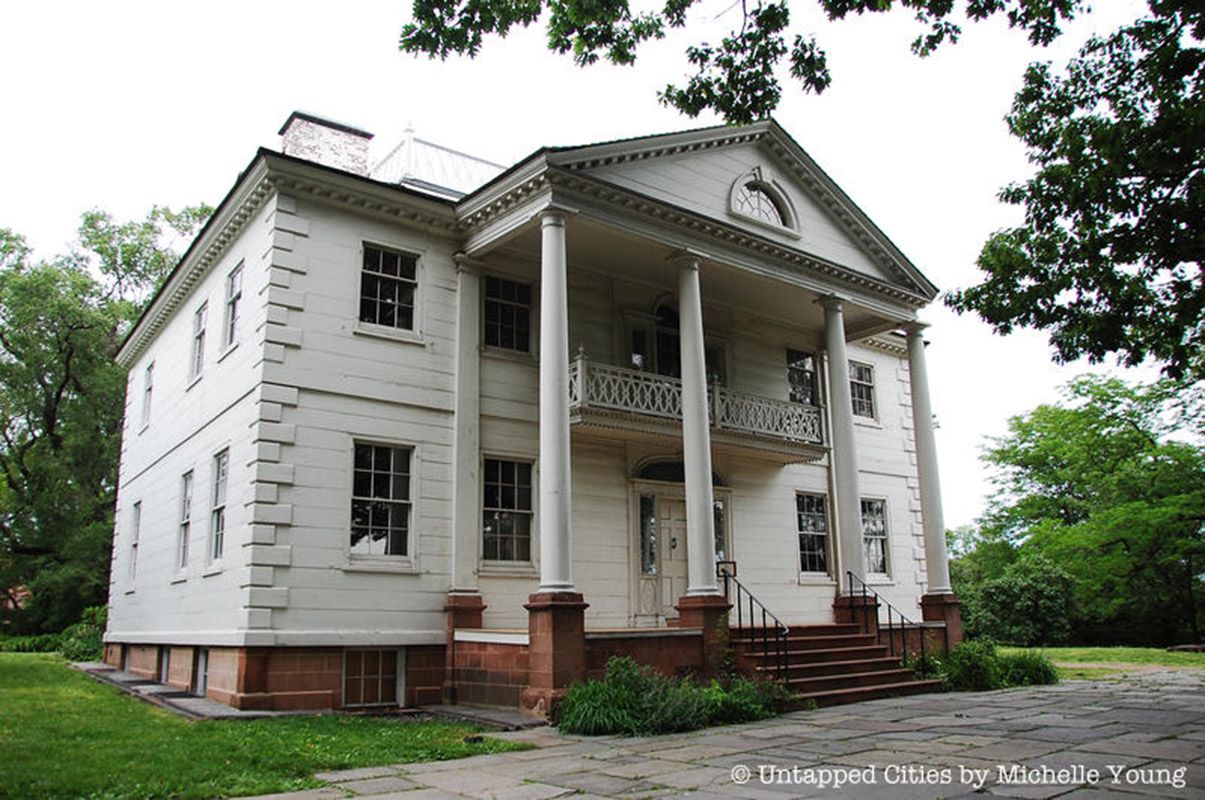
Between September 14 and October 20, 1776, the Morris Jumel Mansion served as George Washington’s headquarters. The mansion was constructed in 1765 by Roger Morris, a British loyalist who returned to England during the War, and in 1810 was bought by Stephen and Eliza Jumel (Eliza would go on to marry Aaron Burr who briefly lived at the house). The house is currently open to the public and is run by the Historic House Trust of New York City.
Fraunces Tavern
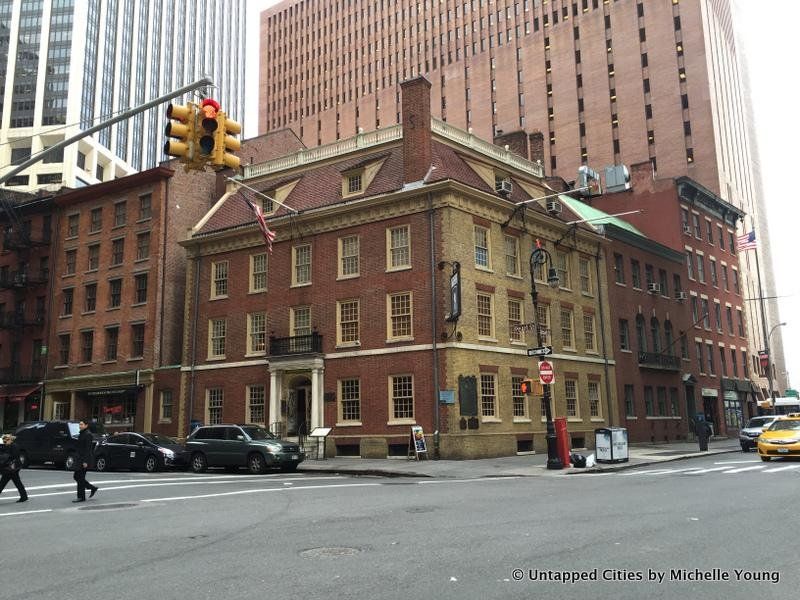
On December 4, 1783, Washington delivered his farewell address to the troops at Fraunces Tavern. A restored version of the Tavern, which is now a museum, possesses a lock of George Washington’s hair and one of his teeth.
Federal Hall
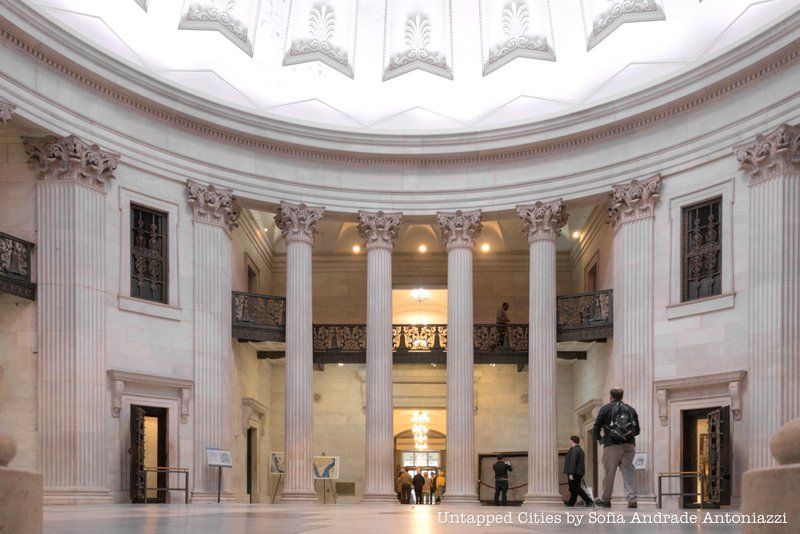
On April 30, 1789, Washington stood on the balcony of (the first) Federal Hall to be sworn into office as the first president of the United States of America. While that building was demolished almost two centuries ago, the stone on which Washington stood, a piece of the balcony, and his inaugural bible can be seen at the current Federal Hall (located on the same site as the prior one), his desk is in the New York City Hall, and another piece of the balcony can be found in the lobby exhibit of The New York Historical Society.
St. Paul’s Chapel
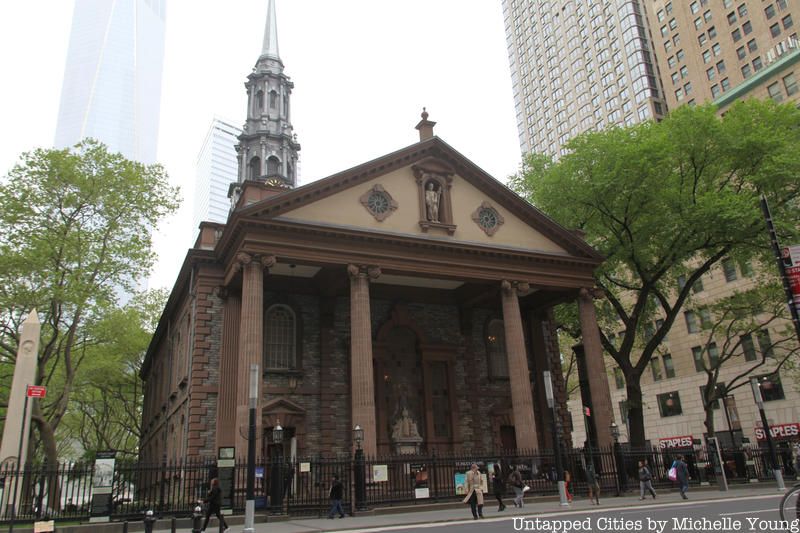
On his inaugural day, Washington, along with members of Congress, worshipped at St. Paul’s Chapel. Washington had previously worshiped there in 1776 prior to retreating from the City and continued to do so during his tenure as president in New York. Washington’s marked off and commemorated with an eighteenth-century oil painting of the Great Seal of the United States.
The Samuel Osgood House
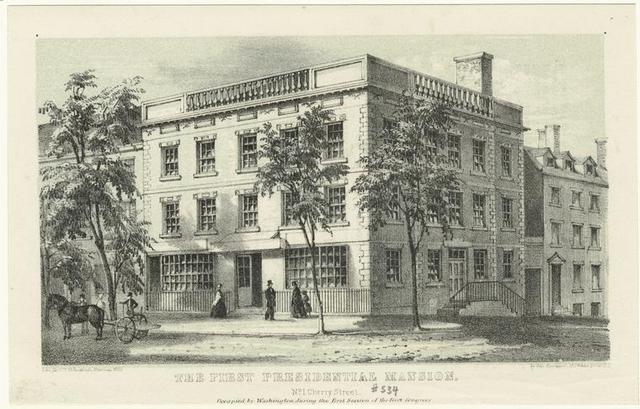
From April 23, 1789, to February 23, 1790, George Washington lived in the Samuel Osgood House, located at 1 Cherry Street, making it our nation’s first presidential mansion. While the house was demolished in 1856, a plaque currently located on the Brooklyn Bridge memorializes the country’s first “White House.”
The Alexander Macomb House
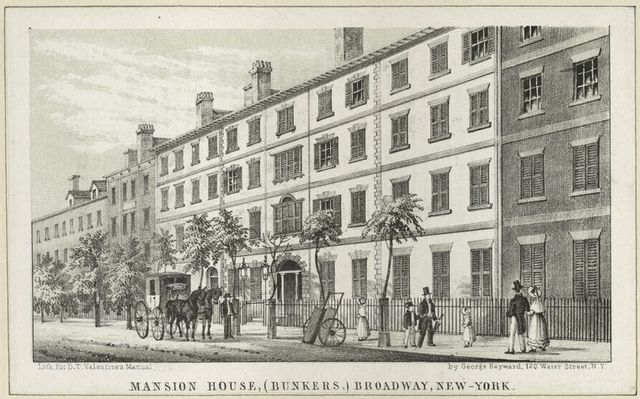
The Alexander Macomb House became the country’s second presidential mansion, from February 23 to August 30, 1790. A plaque currently marks the House’s location at 39 Broadway.
John Adams
Conference House
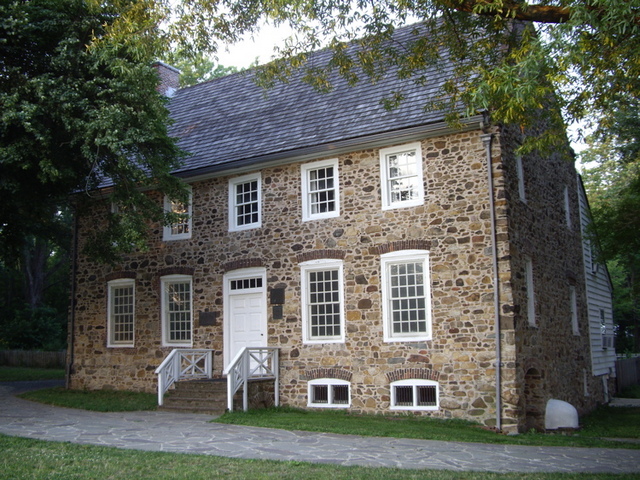
On September 11, 1776, John Adams, Benjamin Franklin, and Edward Rutledge met with Lord Howe, the Commander in Chief of the British forces in America, in an attempt to end the Revolutionary War. While their conference was unsuccessful, it lent its name to the house in which it was held. Conference House, which is located on the southern tip of Staten Island, is open to the public and run by the Historic House Trust of New York City.
Richmond Hill
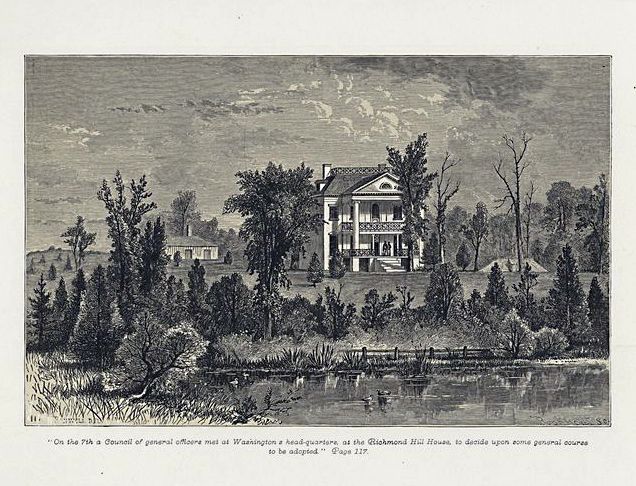
As the first Vice-President of the United States, Adams lived in a mansion located on Richmond Hill. The house had been previously used by Washington as his headquarters and Aaron Burr later lived there. In 1817, the land was subdivided by John Jacob Astor and sold for residential development. It was located near Lispenard’s Meadows at the corner of what was then Varick and Van Dam streets.
Thomas Jefferson
57 Maiden Lane
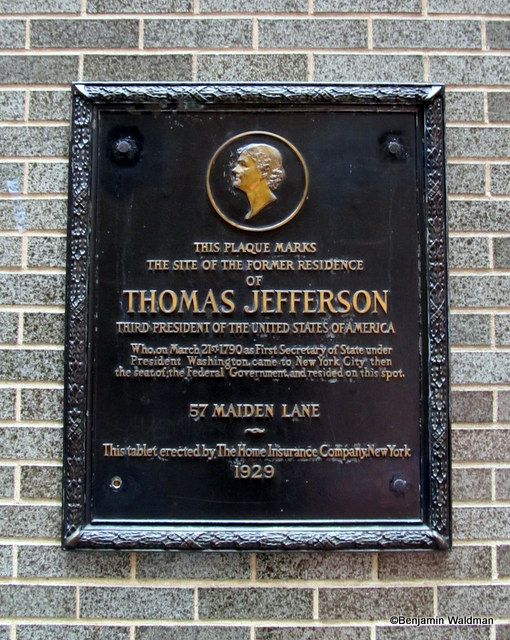
As the first Secretary of State, Jefferson resided, for the majority of his time, in the nation’s capital at 57 Maiden Lane. Jefferson leased his residence from two grocers, Robert and Peter Bruce, for 106 pounds a year. In 1929 a plaque was installed on the site of his former house (to learn more about Jefferson’s other stops in New York, check out Monticello’s website).
James Monroe
New York City Marble Cemetery
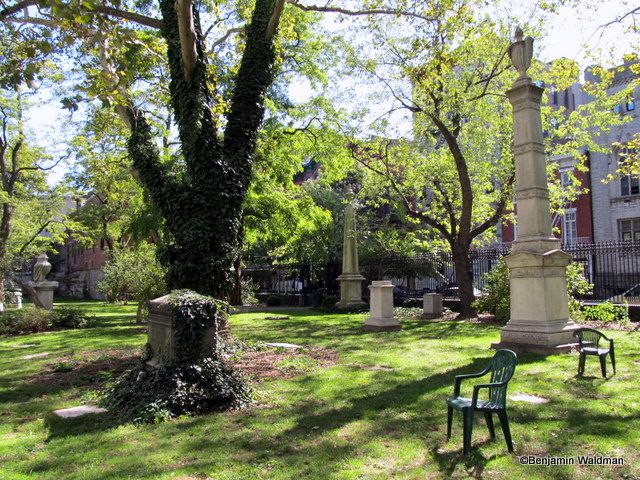
In 1830, Monroe moved to New York to live with his son-in-law, Samuel Gouverneur, after the death of his wife. When Monroe died in 1831, a funeral service was held for him at St. Paul’s Chapel and he was buried in the New York City Marble Cemetery, in a vault owned by Gouverneur.
In 1858, Virginia requested that Monroe’s body be repatriated. With the agreement of the Gouverneur family, Monroe’s body was disinterred on July 2, 1858, and moved to the Church of the Annunciation on 14th Street, before being moved by ship to Virginia. Monroe was re-buried in Richmond’s Hollywood Cemetery.
Andrew Jackson
Union Square Park
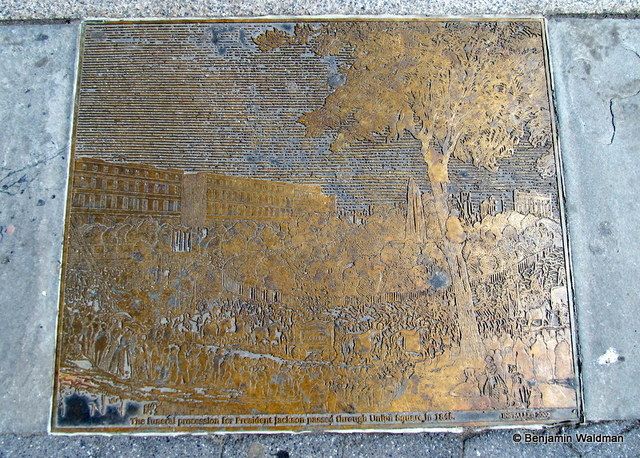
In 1846, Jackson’s funeral procession passed through Union Square Park. This event has been memorialized in one of the plaques that circumvent the Park.
John Tyler
The Church of the Ascension
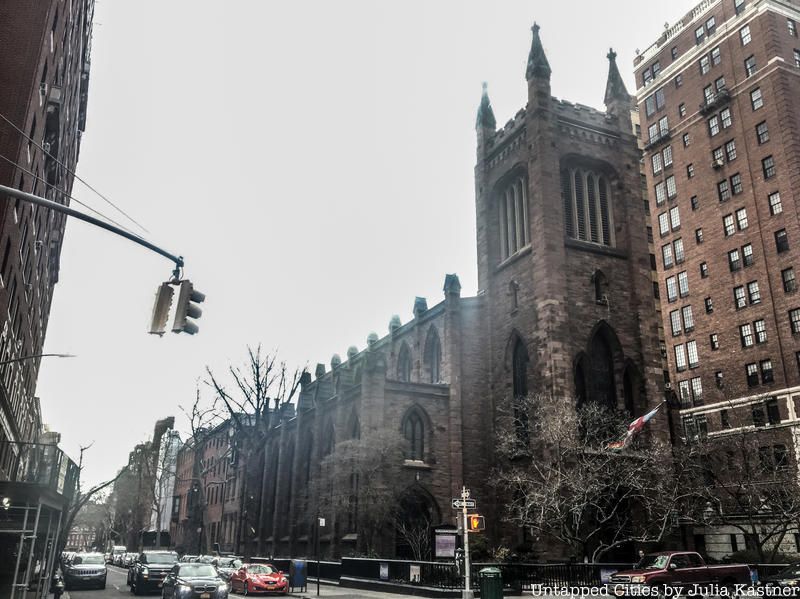
On June 26, 1844, Tyler became the first president to wed while in office. He married his second wife Julia Gardiner on Fifth Avenue, in the Church of the Ascension.
James Polk
Matthew Brady’s New York Photo Studio
Polk became the first sitting president to have photographs taken by Mathew Brady in his New York City Studio.
Abraham Lincoln
Read the Full Story
This article is available to Supporter tier members and higher. Join for just $5/month to unlock 12,000+ stories about New York City.
Become a Supporter