


Dubbed the “Cathedral of Commerce” when it debuted in 1913, the Woolworth Building represented an unprecedented feat of engineering and architectural prowess. Rising 792 feet, it was the tallest building in the world when it opened and boasted technology like electricity, steam-powered heating, and Otis elevators—rare at the time.
It was commissioned by Frank W. Woolworth, a Gilded Age self-made tycoon who was born a farm boy in upstate New York and made a fortune by opening a chain of “five and dime” stores that catered to the middle class and revolutionized the way Americans shopped.
By the time Woolworth moved to New York City, he had almost 600 stores across the East Coast and Midwest. He hired Cass Gilbert to design his headquarters, instructing him to use the Gothic Revival style inspired by the Houses of Parliament in London, which he admired on a recent trip to Europe. Gilbert, who was experienced at designing buildings in the Beaux-Arts style popular during the Gilded Age, looked to the abbeys of Mont Saint Michel and Saint Ouen in France and the Victoria Tower in London for inspiration. Both the exterior and interior of the building are richly decorated with Gothic motifs and Byzantine-style mosaics.
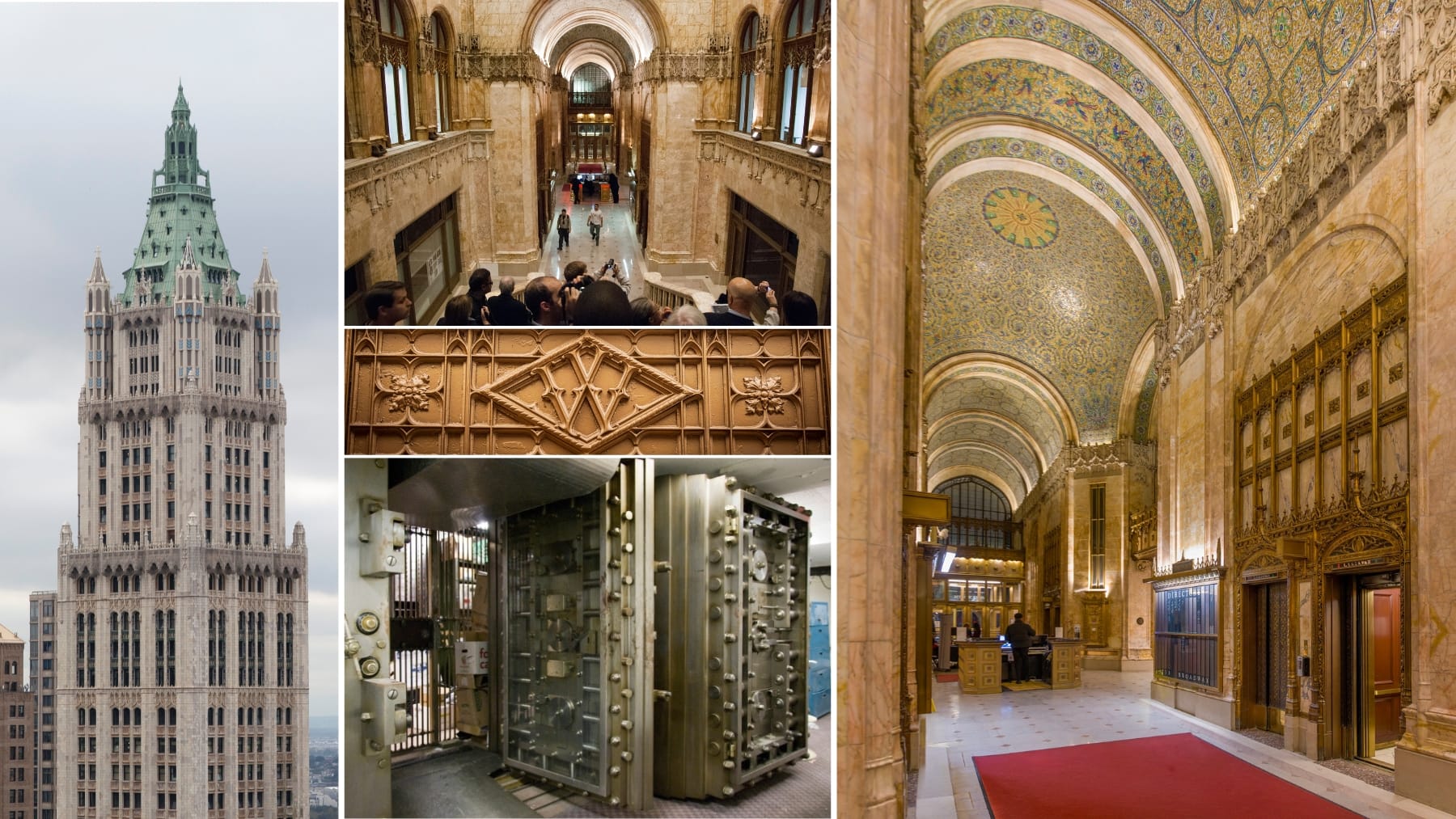
Woolworth Building Exclusive Access Tour
Multiple Dates & Times: Step inside the stunning cathedral-esque lobby and descend to the sub-level for a peek at the original vault on the only authorized tour of this rarely accessible landmark.
1. Woolworth Building Superlatives—Fastest Elevators and Tallest Chimney
The Woolworth Building used to be powered by coal burners and you can see the enormous undertaking in vintage photographs. At the time of construction, the Woolworth had the tallest chimney in the world. During the course of the building’s renovations, the chimney, which mirrored the height of the building, was demolished and new elevators were later erected in its place to serve the tower’s tenants.
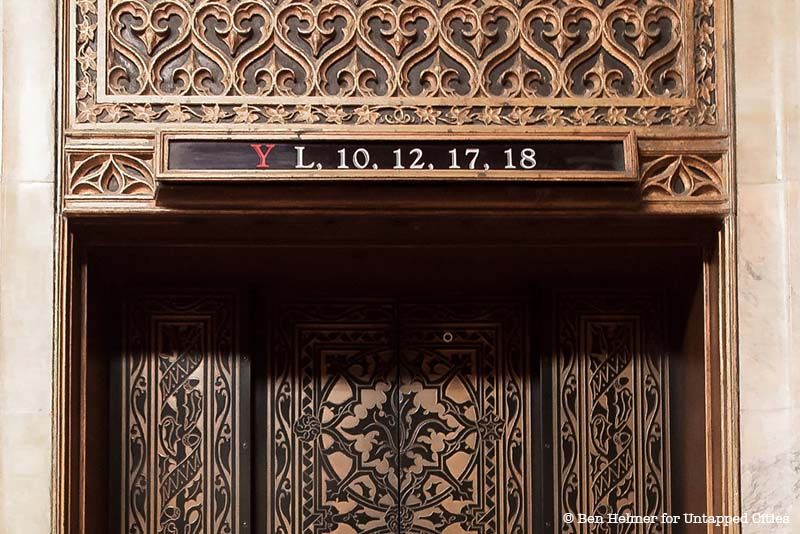
The Woolworth also had the fastest elevators in the world when it opened. The elevator shaft is tapered so that, in the event of a free fall, air cushions will prevent the elevator car from gathering too much speed and plummeting to its doom. Apparently, when the Woolworth was built in 1913, they tested the system by allowing each elevator car to fall.
2. Remnants in the Boiler Room
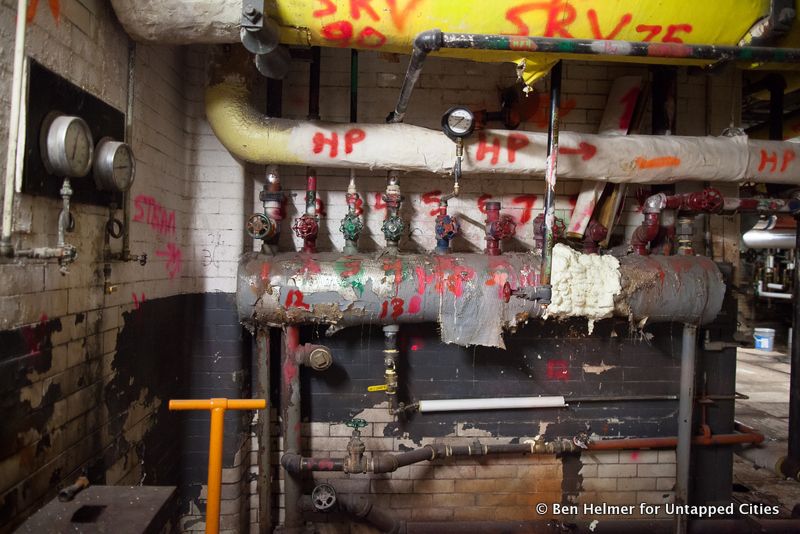
The Woolworth Building’s basement was filled with numerous relics of Woolworth’s attempt to have the building be self-sufficient. An attempt was made to drill through the foundations (which are made up of caissons since the building is located on mud and not bedrock) to reach a fresh water source.
After drilling over 1,500 feet, the drill still had not exited the Manhattan schist, Manhattan’s bedrock. The secondary source of water sought was never found. It is the deepest anyone has ever attempted to drill through the bedrock and it is still used as the minimum depth that the schist reaches.
3. There Are Hidden Symbols in the Lobby’s Ceiling
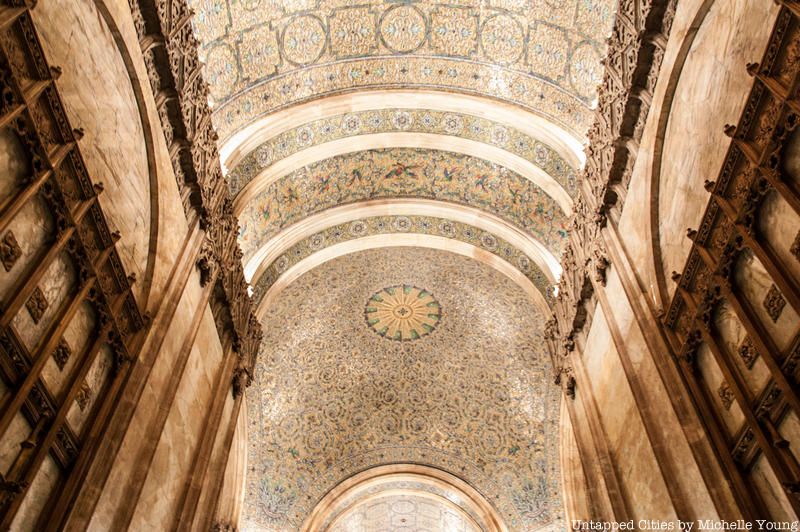
The arcade on the east side of the lobby, with a main entrance on Broadway and alternate entrances at Park Place and Barclay Street, is topped with a two-story high barrel vaulted ceiling covered in shimmering glass mosaic tiles. This dramatic entrance gives one the feeling of entering a house of worship and earned the building the titles of “The Cathedral of Commerce.”
The mosaic work of the ceiling was done by the prominent twentieth century decorating firm of Heineicke and Bowen. The design of floral patterns and exotic birds in colors of blue, green, gold and red are Byzantine in style and reminiscent of early Christian churches found in Italy. In a 1921 brochure for the building, the ceiling is described as
“a flood of dazzling jewels glittering in the sunlight – emeralds, rubies, sapphires, diamonds – a riot of harmonious colors, all spread out in a golden setting, and arranged in exquisite design. The whole effect is one of grandeur with which the arcade of no other building in the world may be compared.”
The glittering effect of the ceiling is due to up-lighting hidden within the “lace-like marble cornice at the springing of the arches.” In the galleries at the northern and southern ends of the arcade’s cross-sections are two murals that depict the allegorical figures of “Commerce” and “Labor,” reinforcing the idea that in this building, its business that is sacred.
4. There’s a Safe Deposit Vault in the Basement
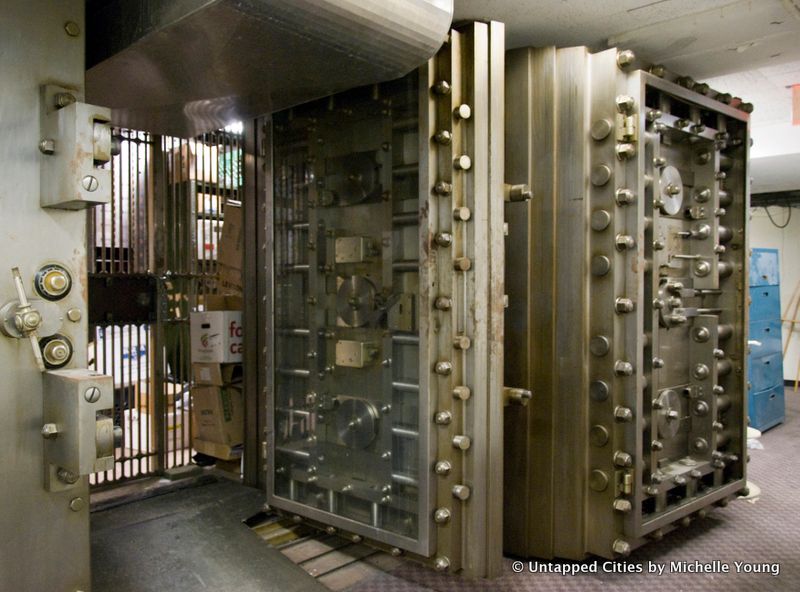
Irving National Bank was the Woolworth Building’s main anchor tenant until relocating to their new headquarters at 1 Wall Street in 1931 (they also changed their name to Irving Trust Company at that time). The bank vault is no longer in use, but still packed to the gills with safety deposit boxes and files.
5. The Doors in the Basement Once Led to the Subway
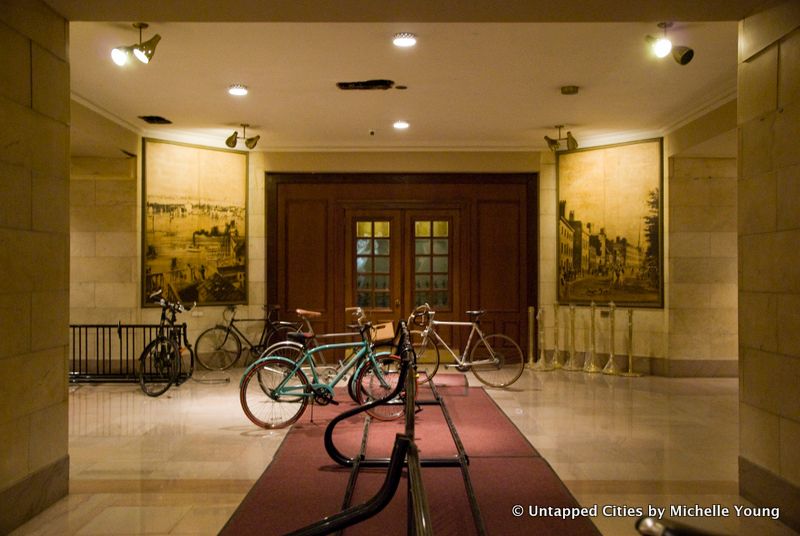
Now closed off, the doors in the bike room area of the basement once led directly into the subway system. According to Woolworth Building tour guide Jason Crowley, the above red doors once led to a “passageway under Broadway to the BMT and IRT subways. The BMT is now the City Hall R stop and the IRT is the now closed off City Hall stop where the 6 turns around.That passageway was completely filled in under Broadway and no longer exists.”
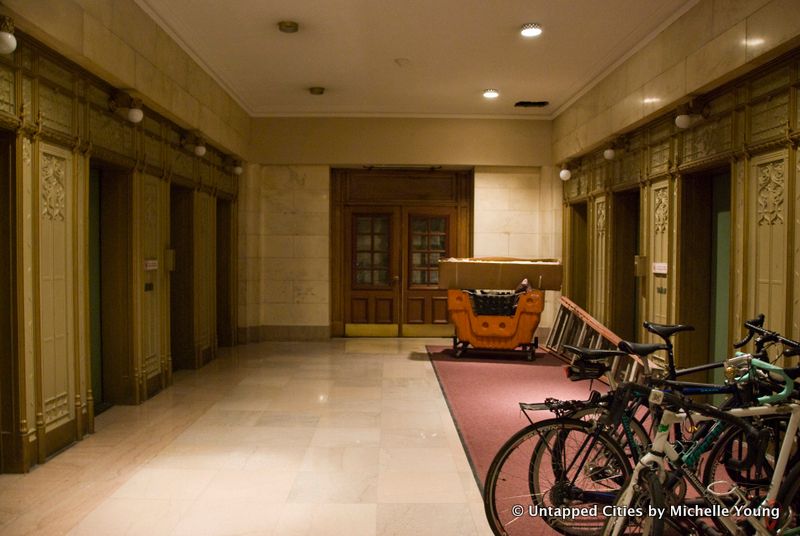
Just to the left, these two smaller red doors once led to a passageway under Park Place to the 2/3 stop. Crowley says, “If you are in that station where the turnstiles are you can still see the former entrance to the passage with metal bars blocking it.”
6. Part of the Manhattan Project Was Headquartered in the Woolworth Building
Read the Full Story
This article is available to Supporter tier members and higher. Join for just $5/month to unlock 12,000+ stories about New York City.
Become a Supporter