

Insiders Events
After-Hours Tour of "Noguchi's New York" Exhibit
Join an exclusive curator-led tour at NYC's Noguchi Museum!
Join an exclusive curator-led tour at NYC's Noguchi Museum!

Learn about the movement to make NYC's cultural institutions on parkland free for all New Yorkers!
Munch on snacks from a local vendor while learning about the history of street food!


The Bronx’s famous Arthur Avenue continues to be a center of Italian-American New York. With its numerous restaurants, bakeries, and rich history, this small street near Fordham University continues to dazzle tourists and New Yorkers, alike and is sometimes referred to as the “Real Little Italy.” However, what even many New Yorkers may not know is that the famous street has a fascinating history that dates back more than 200 years. Here are ten of Arthur Avenue’s biggest secrets:
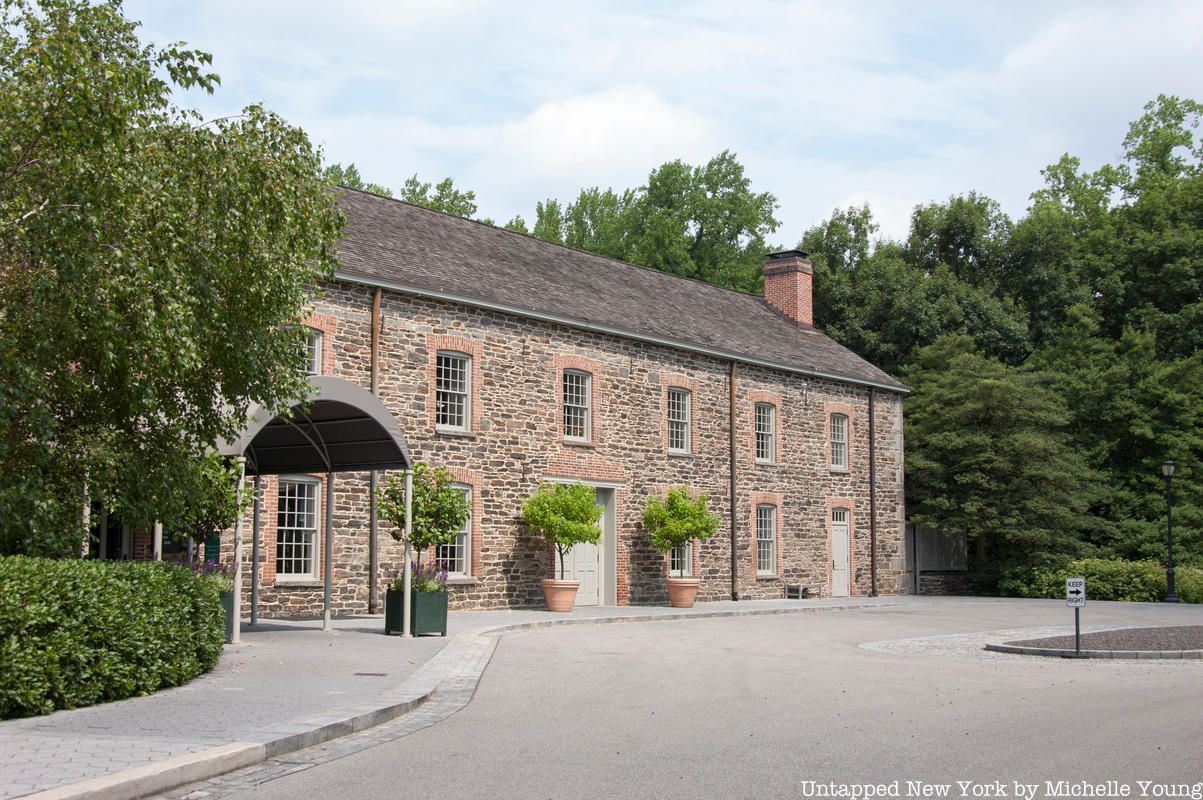
Arthur Avenue’s long history begins in 1760, when French Huguenot Pierre Lorillard moved to New York from France and began his famous tobacco company, P. Lorillard & Co., which still exists today under the Loews Corporation. In 1778, at the time of the Revolutionary War, Lorillard was killed, leaving the company to his widow and five sons. Following his death, the family moved North to a large section of land along the Bronx River, and opened a new tobacco producing plant. The largest building of the plant, known today as the Lorillard Snuff Mill, is still standing within the walls of the New York Botanical Garden, near where the grand Lorillard mansion once stood.
For nearly one hundred years, the family owned and operated the tobacco company in the present-day Belmont neighborhood. In 1870, Catherine Lorillard-Wolfe inherited her great grandfather’s vast estate of tobacco manufacturing businesses and—at the time—became the richest woman in America. Upon her acquisition of the estate, she auctioned it off in two sections: the land of the Belmont neighborhood, which was divided by streets and neighborhoods, and the Lorillard Mansion, which became the modern-day St. Barnabas Hospital and Medical Center.
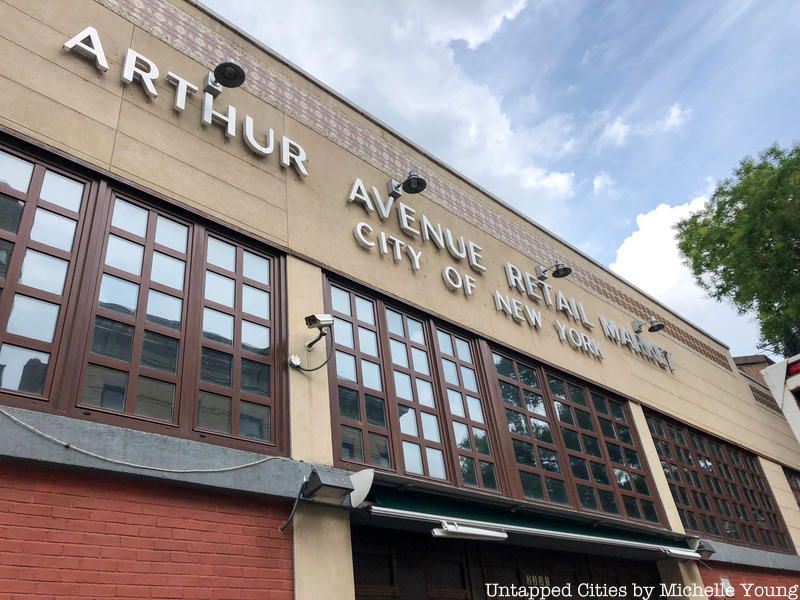
At the time of the estate’s sale, Catherine Lorillard-Wolfe was a great admirer of President Chester A. Arthur. Prior to her death, Lorillard-Wolfe showed her admiration for the 21st president by naming the main street of the new Belmont neighborhood after him.
Similarly, many of Arthur Avenue’s neighboring streets were named after influential figures of the mid-nineteenth century: Hughes Avenue was named after the founder of Fordham University and the first Archbishop of New York, John Hughes; Hoffman Street was named after John Thomas Hoffman, the 23rd governor of New York and previous Mayor of New York; and Bathgate Avenue was named after Scottish immigrant Andrew Bathgate, who managed the estate of one of the Bronx’s original founders.
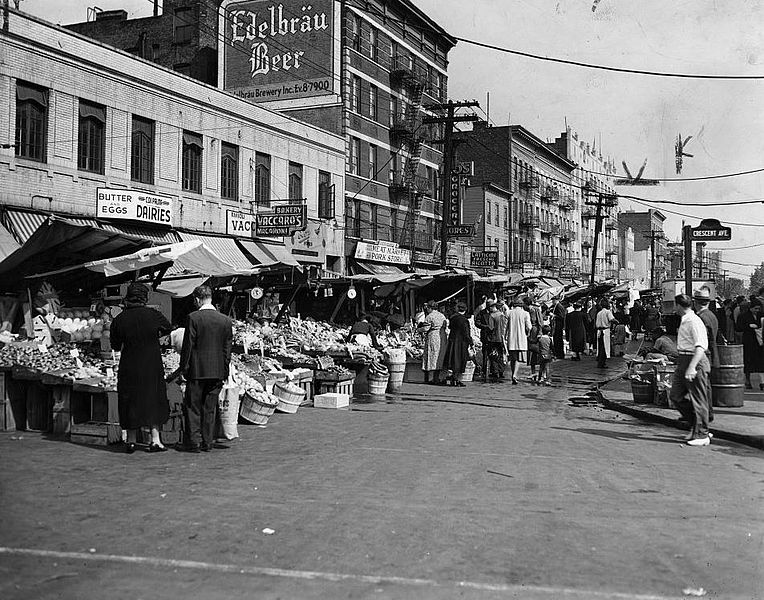
In the 1930s and 40s, Arthur Avenue became a center for Bronx life and commerce. The famous shops and restaurants which line today’s Arthur Avenue used to be traveling push carts owned by Irish and Italian immigrants, who often sold fresh produce and goods. During this time, the Italian population of Arthur Avenue was exponentially increasing as the Bronx’s cultural identity began to take root. Many predominate ad campaigns referred to the Belmont area as “an Italian colony in America,” with Arthur Avenue at the center.
Although Arthur Avenue’s push cart market may be a Bronx-favorite, New York is home to many other famous push cart locations. On Essex Street, the push cart business was alive and well inside Essex Street Market, which recently moved across the street to the New Essex Market. In both Manhattan and the Bronx, these reinvented spaces offered new takes on their historic push cart roots.
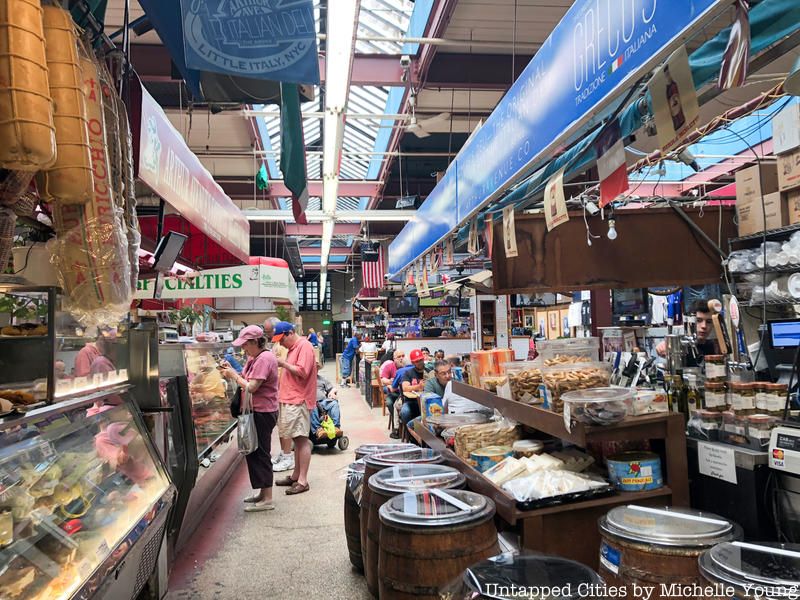
To cater to the needs of hundreds of thousands of shoppers on Arthur Avenue and the cart owners, the Arthur Avenue Retail Market was opened by Mayor Fiorello LaGuardia at 2344 Arthur Avenue in 1940. The market offered stalls to push cart owners for a small fee and allowed for a better shopping experience for customers. Later, the market was converted into the Italian-product marketplace that it is today.
Today the market hosts a variety of diverse specialty vendors such as the Bronx Beer Hall, Felix’s Custom T-Shirts and Alterations, O’CCAFFE, and Funici A’Pizza, O’CCAFFE, Enzo’s of Arthur Avenue on the Go, La Casa Grande Cigars, and Peter’s Meat Market. On our upcoming Untapped New York Insiders tour to the market, we’ll stop by the women-owned DUA Market which sells Balkan and Italian products. We’ll also see a mozzarella-making demonstration at Mike’s Deli where we’ll sample their renowned Eggplant Parmigiana that was seen on the Food Network, when Dave Greco, the second-generation owner of Mike’s Deli, defended his family’s recipe on “Throwdown with Bobby Flay.” Find out what else you’ll get to enjoy at the link below!
Similarly, many other enclosed markets can be found around New York. Chelsea Market, for example, is another enclosed market that features vendors from around the city – albeit more upscale. Both the Arthur Avenue Retail Market and Chelsea Market occupy important roles in New York history—all while serving delicious food.
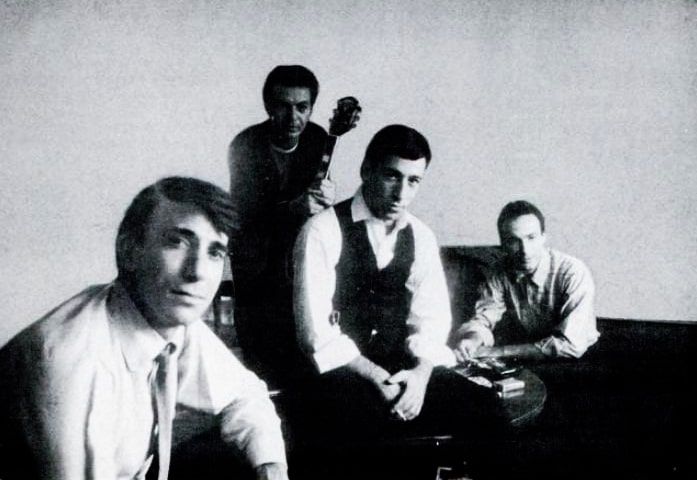
The 1950s boyband Dion and the Belmonts originated on Arthur Avenue but was named after Belmont Avenue, a close distance from Arthur Avenue. The group gained fame for becoming the first Italian-American group to become popular performing “doo-wop” style music. Their first single in 1958, “I Wonder Why,” skyrocketed the group to stardom, followed by other hits such as “A Teenager in Love” and “Where or When.”
Dion DiMucci, the group’s lead singer, later left the band and pursued a successful solo career which spanned several decades. His songs “Runaround Sue” and “The Wanderer” helped establish DiMucci’s stardom by earning him an impressive 39 Top 40 hits. Later in 1989, DiMucci was inducted in the Rock and Roll Hall of Fame.
Subscribe to our newsletter