

Last-Minute NYC Holiday Gift Guide 🎁
We’ve created a holiday gift guide with presents for the intrepid New Yorker that should arrive just in time—
We’ve created a holiday gift guide with presents for the intrepid New Yorker that should arrive just in time—

From lobster traps to origami animals, discover how quirky trees are decorated across the five boroughs!


Discover how NYC architect Richard Roth Jr. left his mark on a Long Island college campus!

Of the hundreds of buildings architect Richard Roth Jr. designed over his 40-plus year career, a relatively unassuming college accommodation complex is among his favorites. Unassuming, but culturally and architecturally significant.
In 1964, Richard was a fairly recent graduate, and memories of overcrowded barrack-style living quarters were fresh in his mind. He was determined that the five-block building complex he was tasked to design at Stony Brook University on Long Island would provide a very different living experience. He loved everything else about college life and despite some academic challenges, enjoyed his school days.
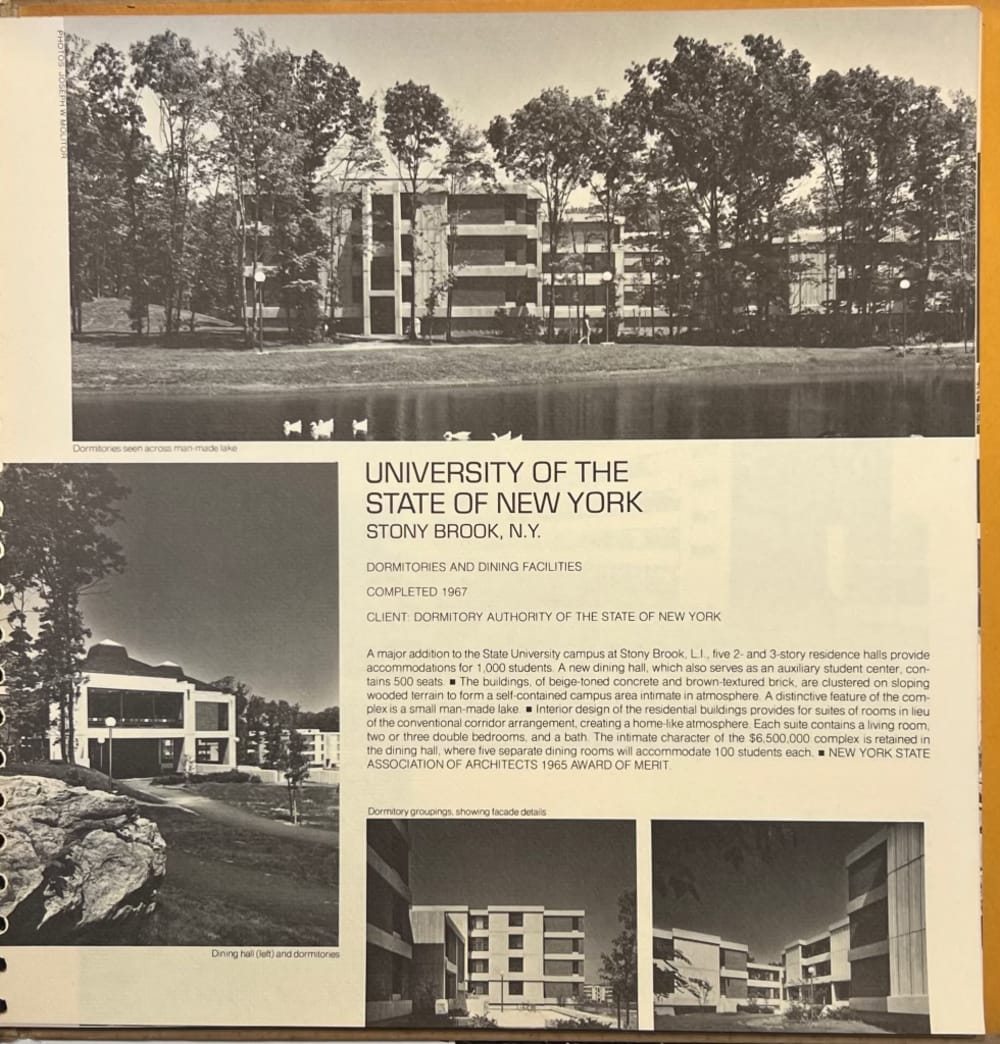
Richard designed the Stony Brook buildings with what has now become a familiar arrangement, but was a new concept for dorms at the time: suites with single bedrooms and a communal living area. Each building of what came to be known as ‘Roth Quad’ housed 200 students. The project also included a dining hall designed by a colleague and former college classmate, so the design bore similar influences.
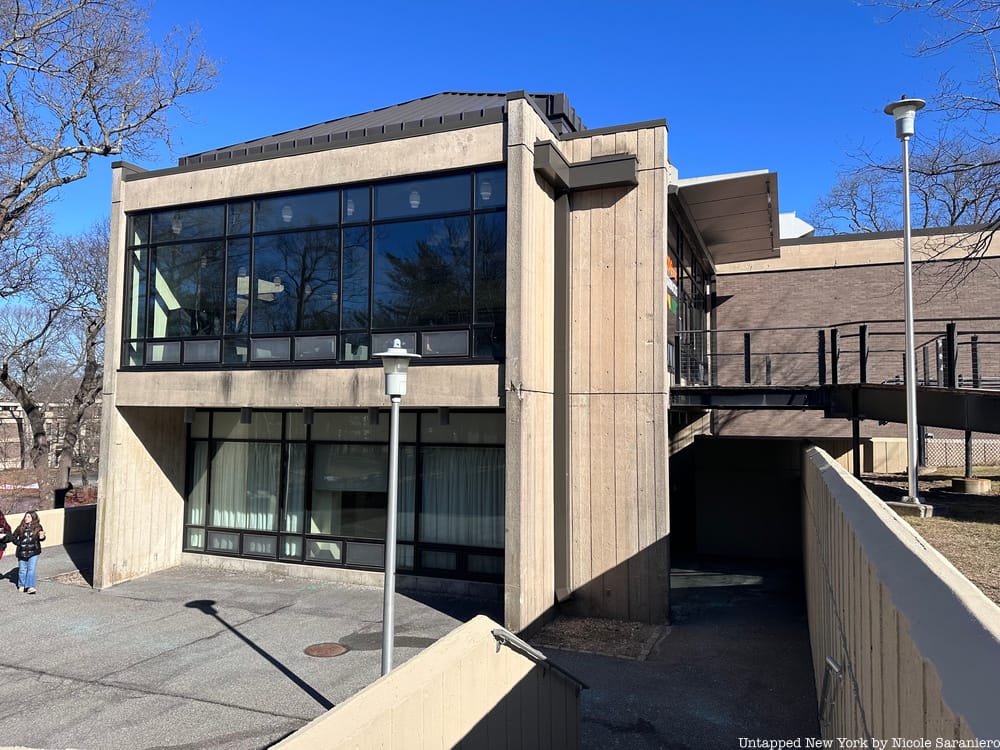
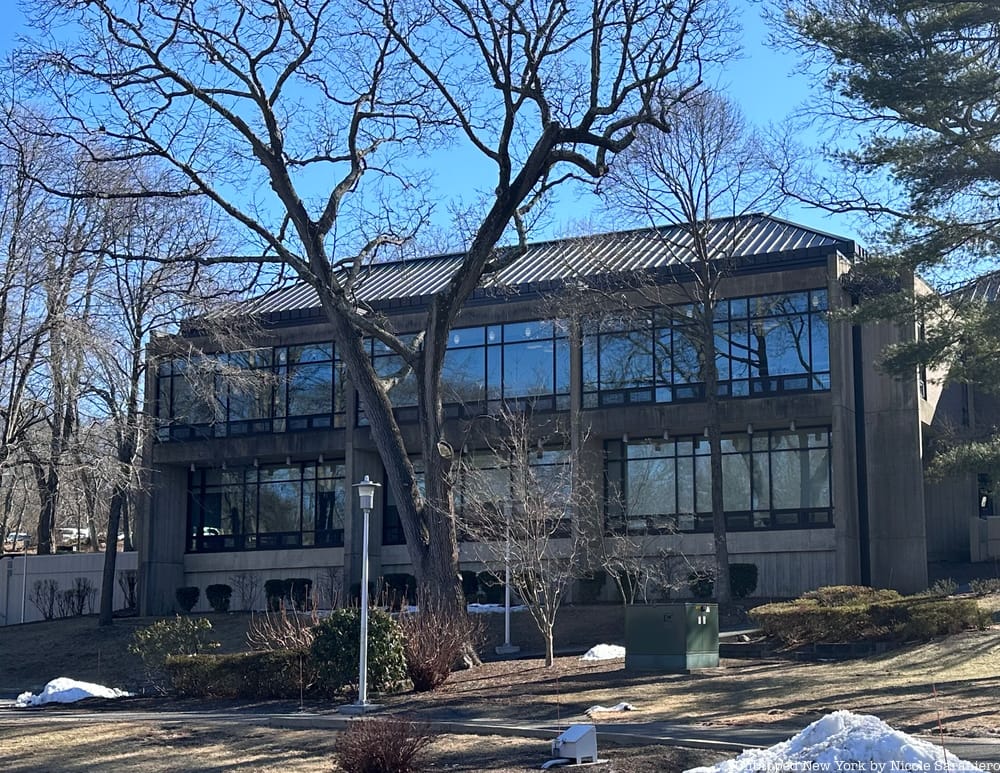
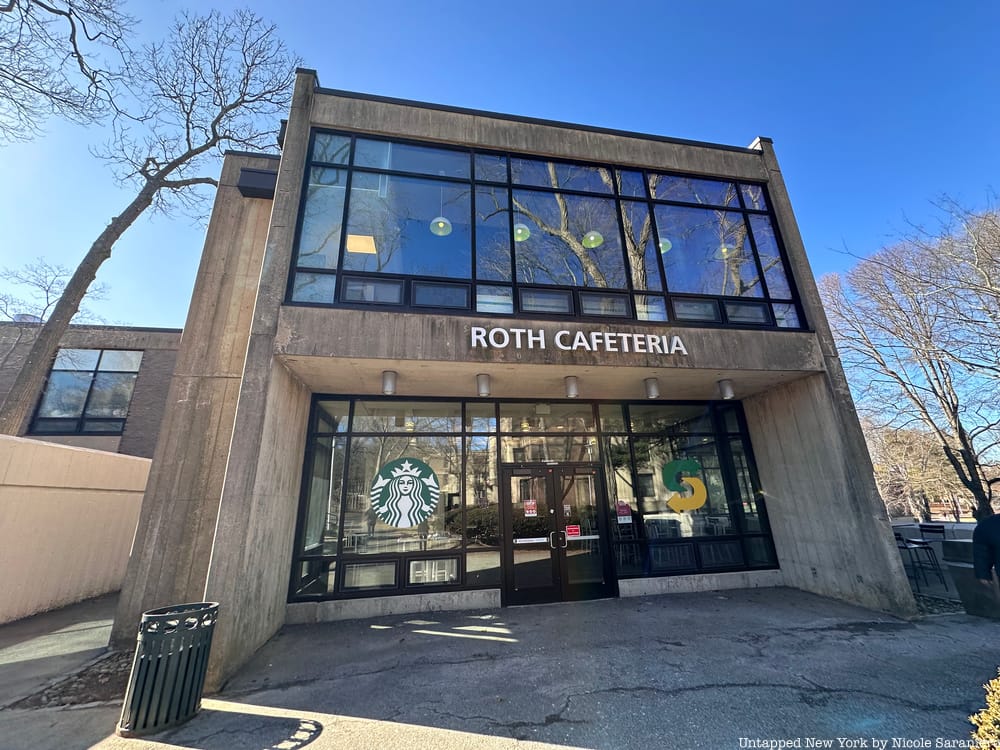
Roth Cafeteria
Richard introduced asymmetry into his plan—creating two building designs and inverting them, so they weren’t identical. With hindsight, these ideas look to be a feature of the era. In her 2019 study, ‘Living on Campus: An Architectural History of the American Dormitory’, Carla Yanni, professor of art history at Rutgers University, identifies the emergence of the ‘hill town’ style. She refers to a move away from the traditional ‘quadrangle’ in the 1960s and the development of more irregular plazas and small village-like communities. She also suggests the hill town was a reaction against "long, windowless corridors and sparse rooms of International Style skyscraper dormitories built in the 1950s."
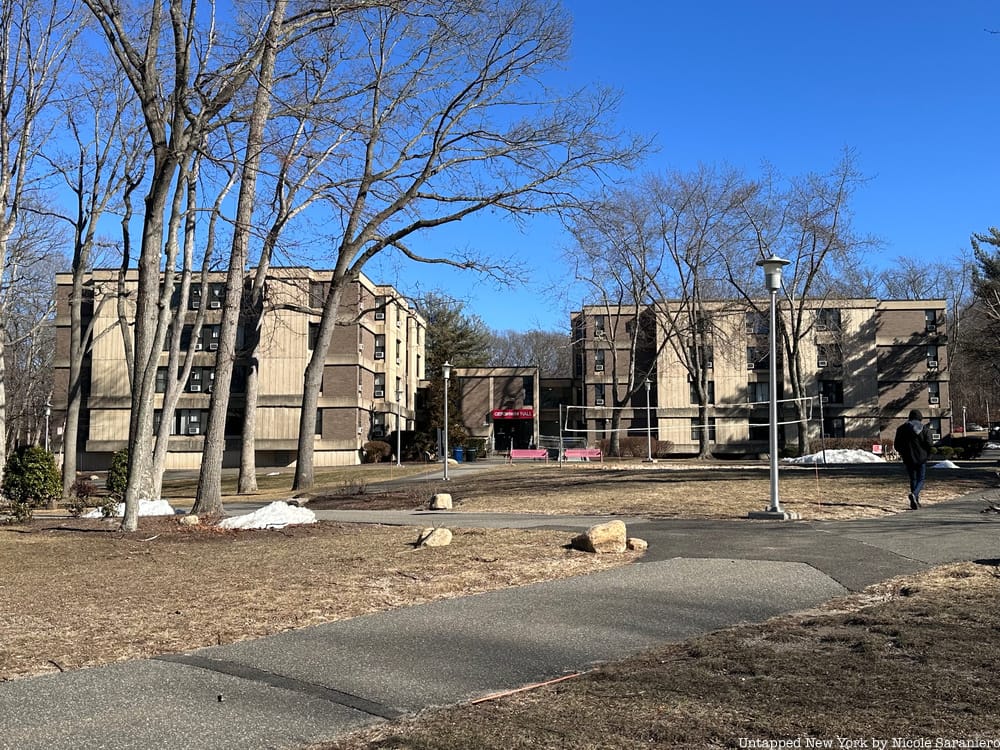
Richard’s original design called for precast concrete panels (molded and cured in a factory), but, after discussions with contractors, he opted to pour and cure the material on site (cast-in-place concrete). “In fact, I was delighted to use it as I’m a big fan of Le Corbusier,” he explained.
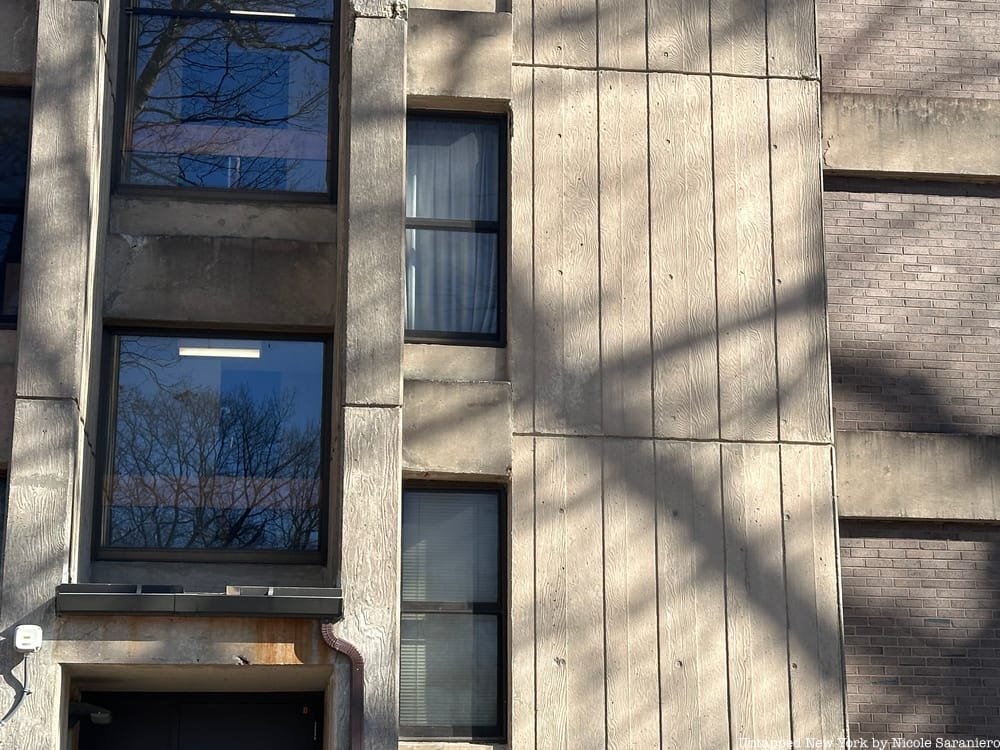
The challenge at the time was that New York concrete masons thought concrete should be hidden, which meant it didn’t really matter what it looked like. Richard had faced a similar issue with Tower East, his apartment building in Manhattan. “It was difficult to convince the concrete masons they were going to be the stars here because everyone would see their work,” said Richard. His powers of persuasion worked. The masons learned how to produce exposed concrete and the excellent results are evident in the buildings of Roth Quad.
What really stands out is a large pond set between the dorm buildings. Richard recruited landscape architects Zion & Breen to design the external environment. He chose them because he was looking for soft-edged surroundings—something the firm was known for. The pond was their idea.
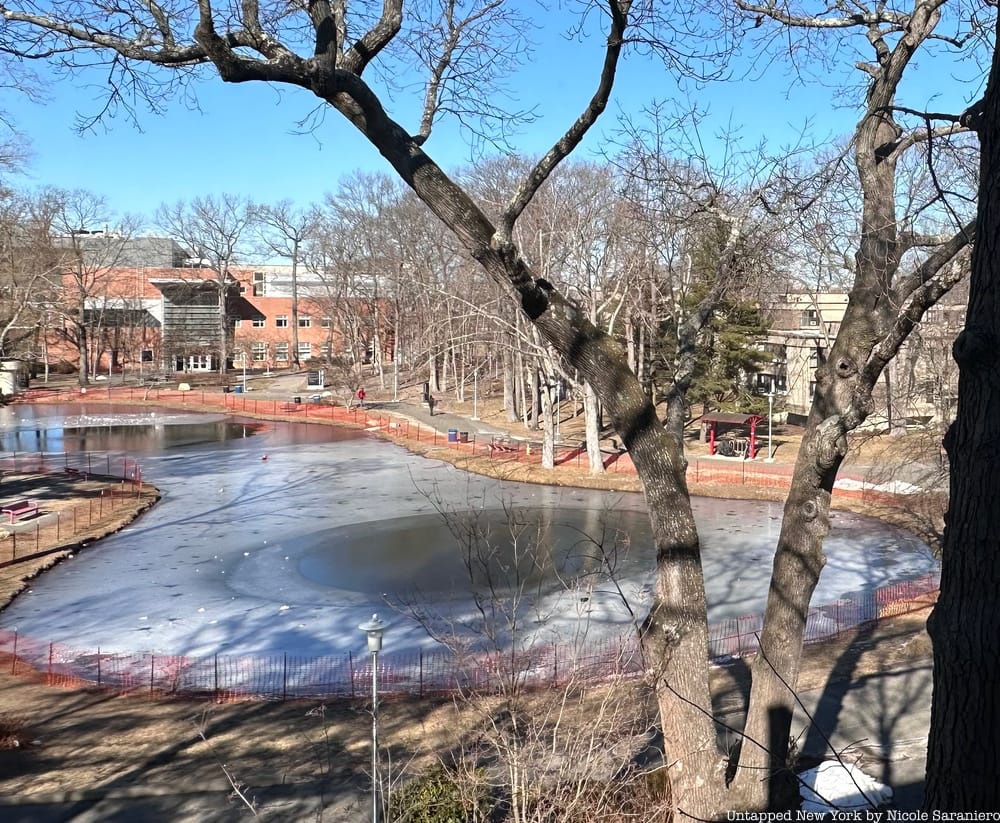
The university clients were somewhat skeptical at first, worried about cost and upkeep. Richard admits he wondered about the feasibility. But, with the practicalities addressed, the pond was built and proved a master stroke. A winding organic shape, surrounded by soft landscaping and a variety of trees and shrubs, the pond looked like a natural feature, like something that had always been there. Just the feel Richard wanted.
The Quad still sits near the center of a much-expanded campus. Some 50 or so years later, the pond plays a huge part in college life, not least as the location for the ‘Roth Pond Regatta’: an annual charity challenge where teams of students build their own ‘boats’ and attempt to cross the pond.


The Roth Regatta, Photos by John Griffin/Stony Brook University
According to the rules, boats can only be constructed from cardboard and duct tape—other materials are strictly for decoration. A highlight in the Stony Brook calendar, the Roth Pond Regatta, which started in 1989, even merits its own Wikipedia page.
The regatta is just the kind of fun tradition that appeals to Richard, who had always enjoyed the lighter side of life, including music, dancing, and sports. At school he was an athlete and at the heart of social activities. He was regularly in touch with his circle of school friends until he died in 2022.
Like his father before him—and his own children later —Richard attended the Ethical Culture School on Manhattan’s Upper West Side. Felix Adler, the founder of the Ethical Culture Movement, which ‘stresses ethical behavior independent of religious beliefs,’ established the school in 1878 as a free kindergarten.
Now called Ethical Culture Fieldston, the school offers education for children from pre-K to 12th Grade (ages 3 to 18) and its alumni include such notable figures as photographer Diane Arbus, broadcast journalist Barbara Walters, and composer Stephen Sondheim.
For Richard, school wasn’t without its challenges. It took some time for teachers to realize he couldn’t read and was finding various ways to conceal issues he’d later realize stemmed from dyslexia. “The head of the English department wrote in my senior yearbook: ‘to the most original speller I have ever known’,” chuckled Richard.
Back then, dyslexia wasn’t understood or recognized. We now know that dyslexia often appears alongside a heightened aptitude for three-dimensional problem-solving and hands-on learning. Anecdotal evidence suggests people with dyslexia are over-represented in fields involving visual-spatial abilities, like art, architecture, and engineering.
With a love of drawing, and these extra talents, Richard focused his energy on art while he was at high school. His mother was keen that Emery Roth & Sons should stay in the family, so encouraged him—and later his younger brother—to pursue architecture as a career.
The high grades expected by prestigious colleges, like MIT where his father went, were not to be. Nevertheless, Richard got several college offers. “Probably I was accepted because my name is Roth and Emery Roth & Sons was a fairly famous firm in the late 40s and early 50s,” he suggested.
Richard attended Miami University in Ohio. One of the professors had made a powerful impression on Richard’s father. Victor Fürth was a Czech who left Prague for England when Hitler invaded. He practiced architecture and planning there during the war. After the war, he arrived in the United States with his wife and joined the university.
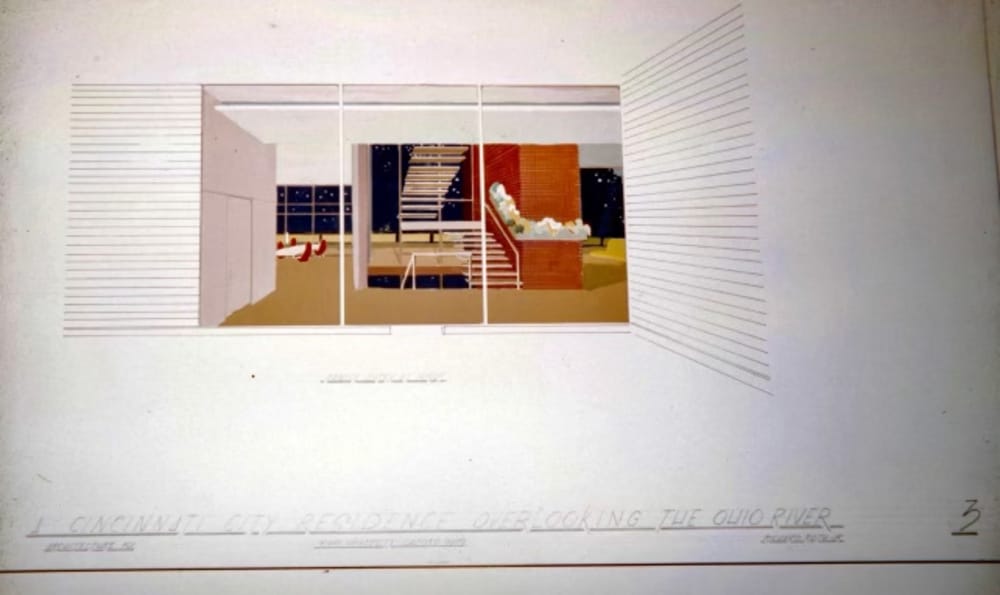
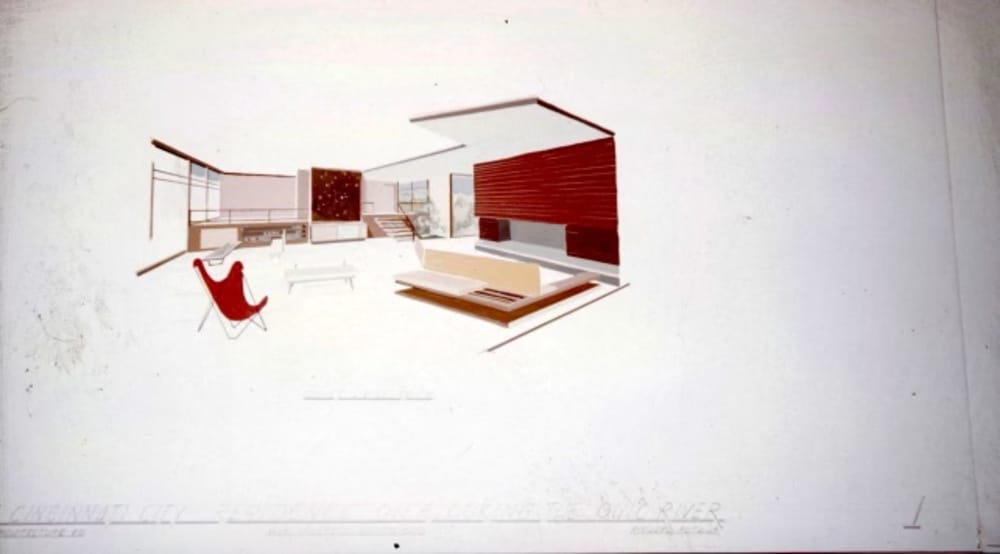
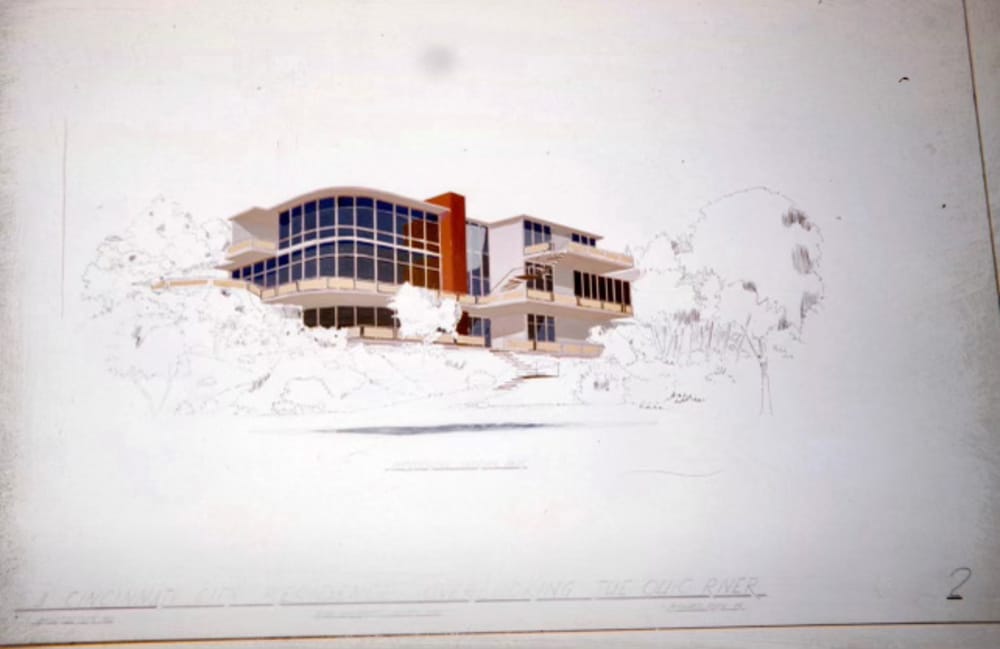
Renderings created by Richard while attending Miami University, Courtesy of the Roth Family Archives
During his time at the university, Fürth formed connections with various firms and would visit Richard Sr. from time to time. On Richard Sr.’s recommendation, Richard Jr. duly applied to Miami. Despite his pedigree, Richard wasn’t accepted straight away. The university wanted him to take solid geometry and calculus during the summer between his senior year of high school and freshman year of college. So, he did the extra study at White Plains High in Westchester County.
As Richard set off for Ohio in August 1952, he also had an offer from Washington University in St. Louis in his back pocket. He figured since it was on the same train line, it would be easy to head over there if he didn’t like Miami. As it turned out, he did like Miami. A lot. In fact, he says it was the best thing that ever happened to him. That could be because on his second day he met Alene Biales, the girl who’d become his wife. But it was undoubtedly also because of the particular education he received.

Victor Fürth and another European professor from Germany, Rudy Fränkel, opened Richard’s eyes to the wider world of architecture. “They gave me an education in architecture I couldn’t have gotten from an American professor who hadn’t experienced Europe—who hadn’t experienced the architecture of the ‘20s and the ‘30s. I was brought up basically with a Bauhaus theory of architecture,” Richard explained. This education influenced designs throughout his career and forged his love of Le Corbusier. Fürth and Fränkel taught the students how to ‘be’ architects, even down to how to dress, for example: “Smart, but never smarter than your client,” remembered Richard.
What he didn’t love at Miami was his accommodation. He moved out of his barrack-style dorm as soon as he could. In post-war America, student populations had expanded rapidly following Roosevelt’s ‘GI Bill’ of 1944. This meant the government paid for veterans to attend college or trade schools. Some universities built new accommodations; others had to make do with what they had, in the short term at least. That meant single rooms became doubles, doubles became triples and more people than originally intended were sharing the bathrooms. That lack of privacy and comfort was burned into Richard’s memory.
By the time he graduated, Richard was married and had a baby daughter (Robyn). He also had a job. Richard regularly acknowledged his good fortune of being able to join the family business and the advantages of being the boss’s son. It meant he often got to choose the projects he worked on, even as a young architect. He saw Stony Brook as a great opportunity to make an impact on college life.
To Richard’s delight, after the project was completed in 1966, the university invited him and his wife to a celebratory dinner. Faculty and students alike were so pleased with the outcome they wanted to meet him and show their appreciation. Even before it was finished, the complex received an honorable mention in the 1965 New York State Association of Architects design awards.
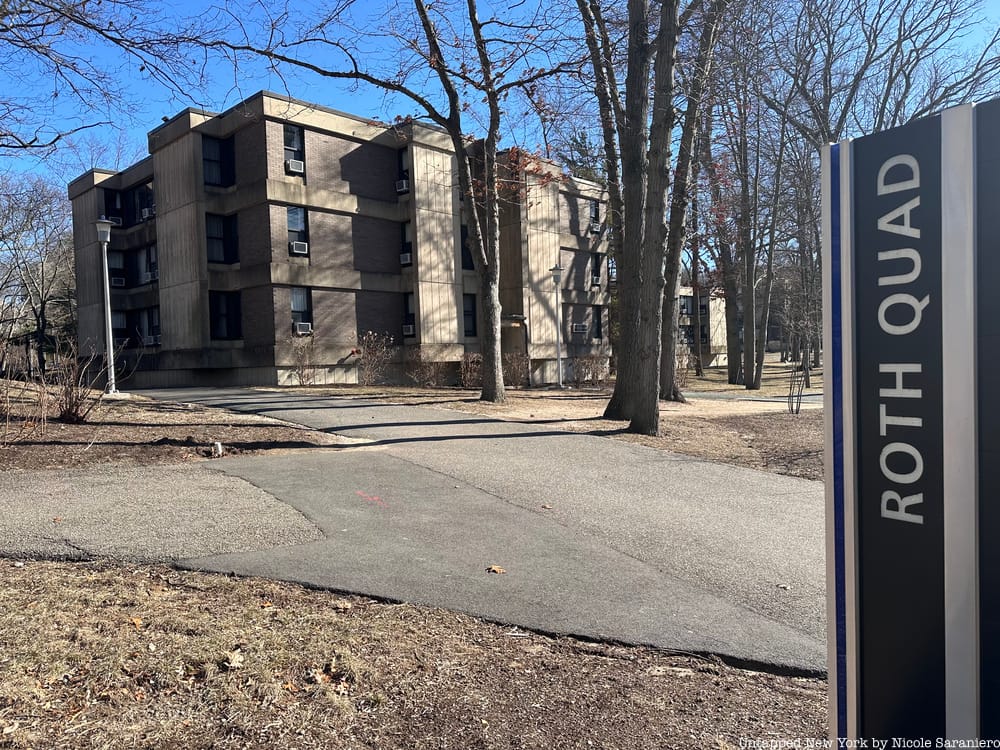
People still love the Roth Community, as the complex is known today. It’s one of the most popular housing options at Stony Brook. Richard looked back fondly at his regular trips out to Long Island while construction was in progress. “I got out there once a month at least. The projects I loved I spent a lot of time nurturing because they meant so much to me,” he said. “Stony Brook was a labor of love.”
Learn more about Richard Roth Jr. and his work in NYC during a virtual livestream where we'll visit Emery Roth & Sons-designed buildings in Lower Manhattan, speak with Jo Holmes, author of the Behind the Curtain Wall series, and Robyn Roth-Moise, Richard's daughter!
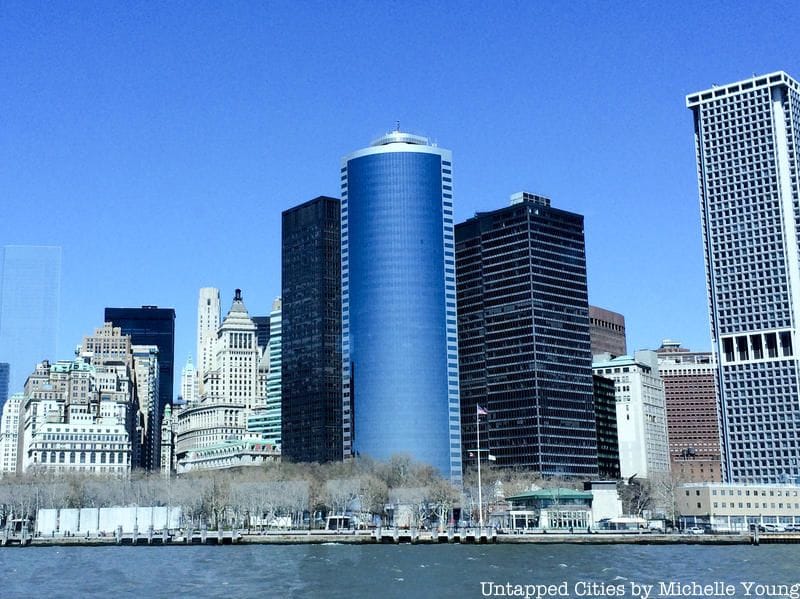
Wednesday, March 12th at 12 PM ET: Join Justin Rivers, Jo Homes, and Robyn Roth-Moise for a virtual walk and talk as we visit Emery Roth & Sons designed buildings in Lower Manhattan, hear exclusive interview clips, and preview future essays!
Read more essays in Behind the Curtain Wall, here!
Subscribe to our newsletter
