When thinking about the American Revolutionary War, most may jump to the Battles of Saratoga, Bunker Hill, or Trenton. Yet New York City was an incredibly important city during the war, the site of battles including Long Island, Fort Washington, and Harlem Heights, as well as other skirmishes and naval encounters.
George Washington and his troops spent considerable amounts of time across the modern five boroughs, and New York City was an important strategic center for the Continental Army and the British. From Fraunces Tavern where the Sons of Liberty often met to Staten Island’s Conference House where the war almost ended before it began, check out these 11 Revolutionary War sites across the city.
1. Golden Hill (John Street between William and Pearl Streets)
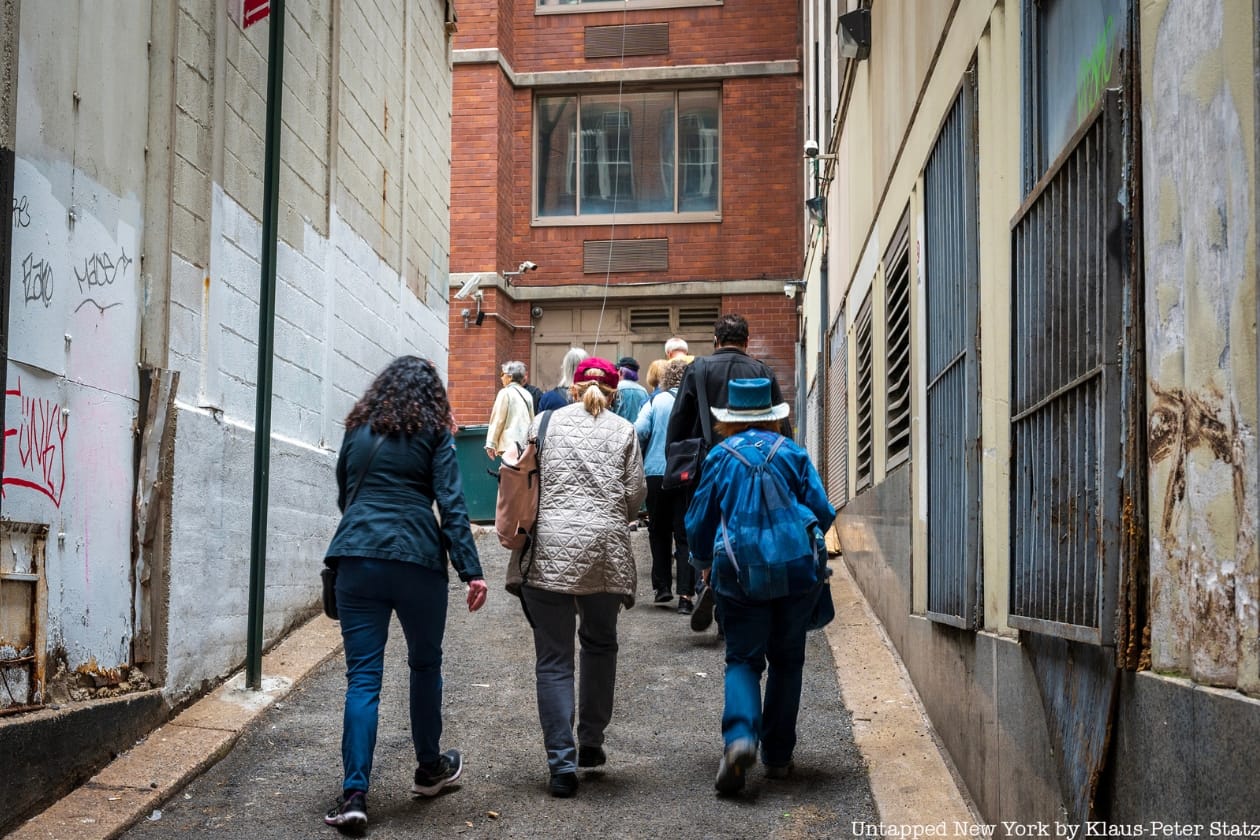
Walking up Golden Hill through Edens Alley
The Battle of Golden Hill, which has largely been forgotten, was a clash between the Sons of Liberty and British soldiers on January 19, 1770, in the modern-day Financial District. The “battle” was one of the first violent incidents in the lead-up to the Revolutionary War, along with the Boston Massacre. The conflict stemmed from the demolition of a “Liberty pole” erected by the Sons of Liberty in City Hall Park, symbolizing their displeasure with British authorities. After a series of poles, which were all either removed or blown up, the Sons of Liberty had enough.
Isaac Sears, an American merchant, tried to stop soldiers from posting handbills at the Fly Market near Maiden Lane. After Sears captured some soldiers and marched them to the mayor’s office, they were surrounded by a crowd of locals, as well as additional British soldiers who unsuccessfully tried to rescue them. After an officer shouted, “Soldiers, draw your bayonets and cut your way through them,” the conflict became bloody, and some soldiers and townsfolk were injured.
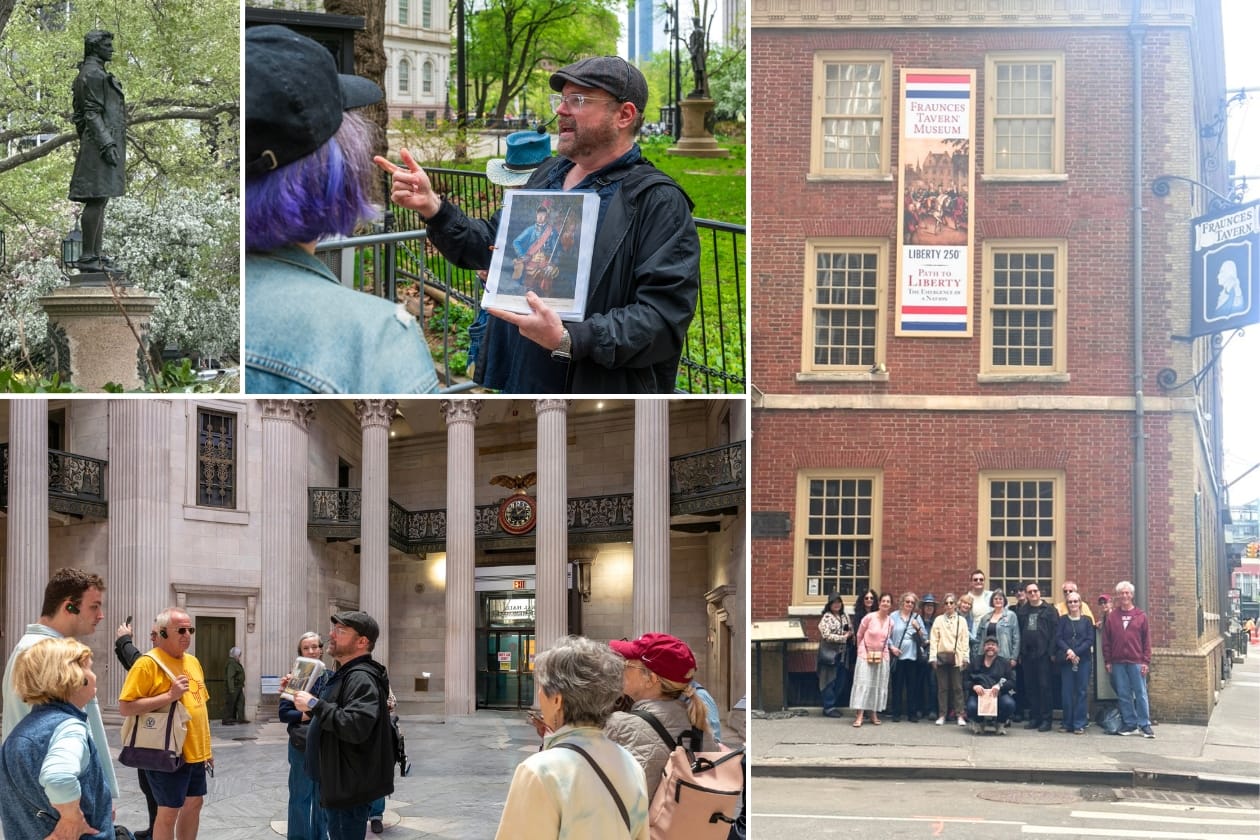
NYC Spies of the American Revolution Tour
Saturday & Sunday at 11 am: Walk in the footsteps the Culper Spy Ring and discover how a group of stealthy Patriots used secret codes, New York's geography, and their own personal skills to help Washington win the war. 🎟️ Optional Add-on: Admission to the Fraunces Tavern Museum
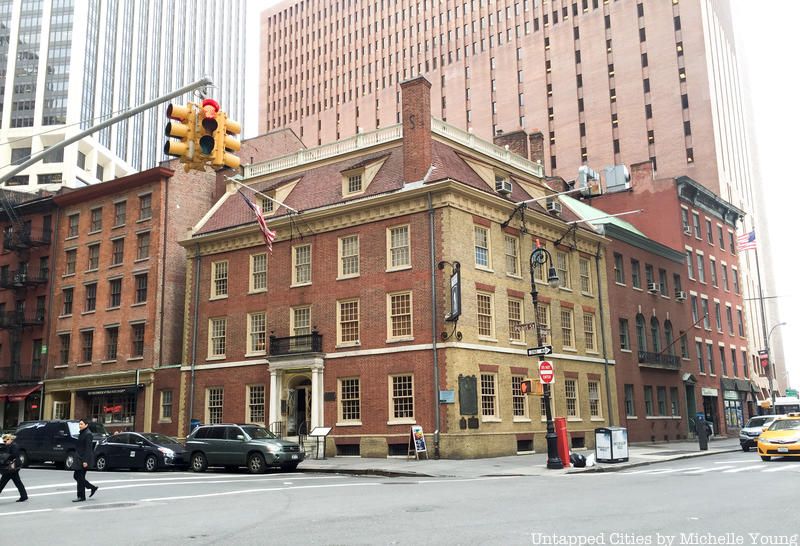
Fraunces Tavern, dating back to 1762, is considered the oldest restaurant in New York City. The brick home in the Financial District dates back to between 1719 and 1722, although it has been renovated and reconstructed many times over the years. Before Samuel Fraunces opened the tavern, the building hosted a dance school and a trading firm.
Fraunces Tavern was one of the main meeting places of the Sons of Liberty, the planners of the Boston Tea Party. In August 1775, the British Royal Navy fired a cannonball through the roof of the building after a student militia from Kings College fired on the HMS Asia. The year after, the British captured the restaurant and forced the staff to feed their soldiers. “British-American Board of Inquiry” meetings were also held at the tavern, ensuring that no American property left with British troops. When the British were finally driven out on November 25th of 1783, General George Clinton held an honorary banquet there for George Washington, whose tooth is now on display in the upstairs museum.
3. Fort Tryon Park and Bennett Park
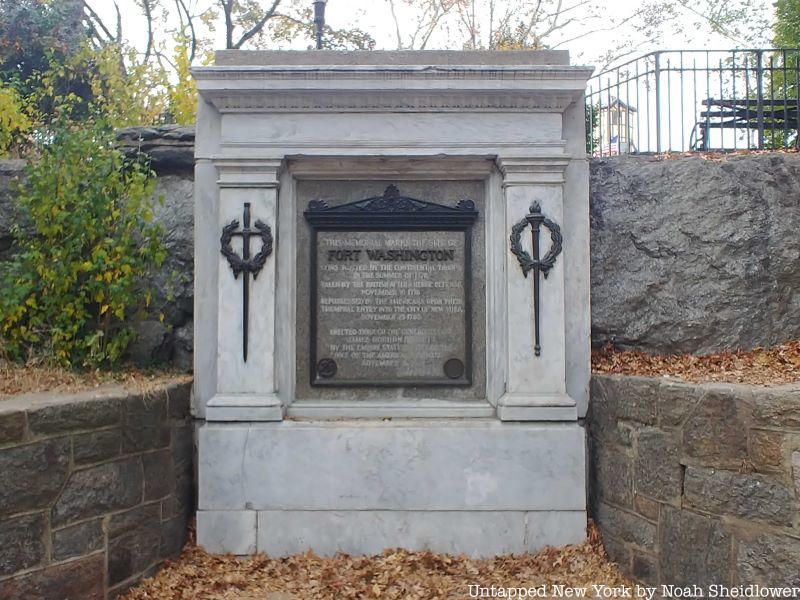
At the site of Fort Tryon Park and Bennett Park in Hudson Heights was the Battle of Fort Washington during the American Revolution, fought on November 16, 1776. The British were victorious over the Patriots, who surrendered the garrison of Fort Washington in one of the worst American defeats of the war. A total of 59 Americans were killed during the battle, and another 2,837 were taken as prisoners of war. Fort Tryon takes its name from Sir William Tryon, the last British Governor of the Province of New York. American soldier Margaret Corbin was the first woman to fight in the war, and Fort Tryon Park’s southern entrance is named after her.
Under William Howe, British forces defeated the Continental Army under George Washington at the previous Battle of White Plains. This made Fort Washington the only American stronghold in Manhattan. Nathanael Greene was ordered to abandon the fort and remove its garrison, but the fort’s commander, Robert Magaw, refused since he believed it could be defended. Although the Harlem River’s tides slowed down the attack, Howe led an assault on three sides, and Magaw eventually surrendered.
4. Morris-Jumel Mansion
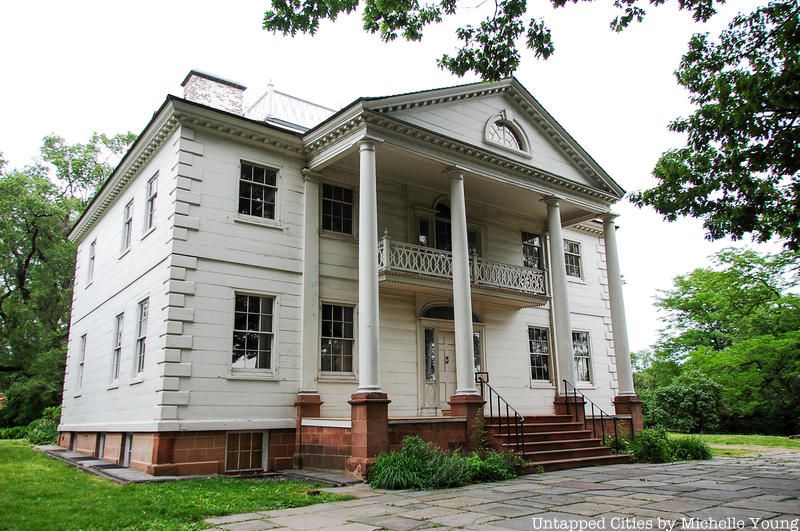
Perched atop a hill in Washington Heights, the Morris-Jumel Mansion is one of NYC’s most prominent Revolutionary War sites. It served first as a summer house for a wealthy British colonel, then as headquarters for troops during the American Revolution, then an inn for weary travelers. Constructed in 1765, the Morris-Jumel Mansion is the oldest residence in Manhattan, built as a summer house for British Colonel Roger Morris and his wife Mary Philipse. The mansion was originally called “Mount Morris” since it was situated on 135 acres at one of the island’s highest points.
When the American Revolution broke out in 1776, the Morrises departed, and George Washington and his Continental officers converted the home into their headquarters. Washington secured a victory during the Battle of Harlem Heights partially because of the home’s strategic location atop a high vantage point between the Hudson and Harlem Rivers. Shortly after, though, Washington and his troops retreated north to White Plains, after which the mansion was occupied by British and Hessian armies.
5. Old Stone House
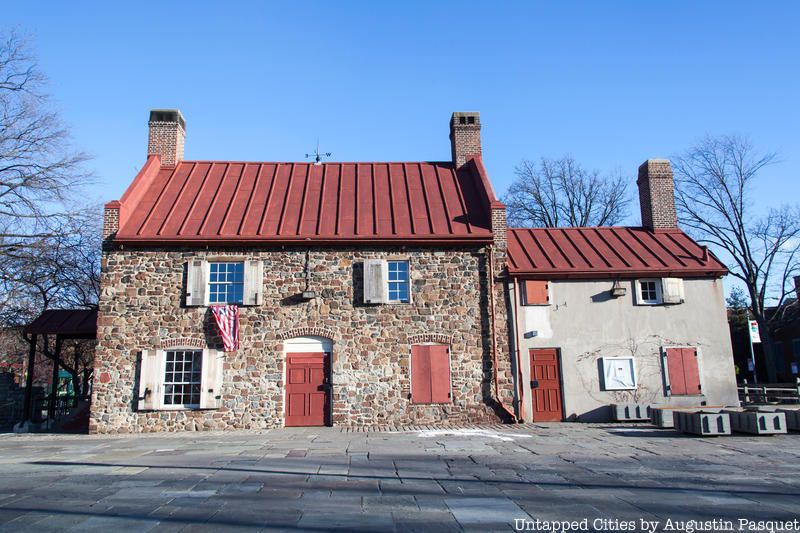
The Old Stone House is a 1933 replica of the Vechte-Cortelyou House, which was destroyed in 1897. The solid stone house was originally constructed in 1699 by Hendrick Claessen Vechte, who harvested oysters in Gowanus Creek and ferried the family’s produce to lower Manhattan. The home served as a significant location during the Battle of Long Island, the largest battle of the American Revolution.
On August 27th, 1776, American General William Alexander led a regiment of 400 Maryland soldiers against 2,000 British troops, who were fighting from their stronghold at the Old Stone House. Most of the Maryland 400 lost their lives that day, and some men who tried to cross the marsh were bogged down and eventually captured. The soldiers were buried in a mass grave on what is today 3rd Avenue between 7th and 8th Streets. The Old Stone House, located in Washington Park, was reconstructed using stones from the original site and remains one of NYC’s most important Revolutionary War sites.
6. Bowling Green
Read the Full Story
This article is available to Supporter tier members and higher. Join for just $5/month to unlock 12,000+ stories about New York City.