
Things to Do
Hear Live Music Inside NYC's Catacombs
Enter to win a pair of free tickets to an intimate concert performed inside the catacombs of The Green-Wood Cemetery!
Enter to win a pair of free tickets to an intimate concert performed inside the catacombs of The Green-Wood Cemetery!

Explore the home of Free Shakespeare in the Park at the first open house event of the season!


The Roosevelts’ lineage and history are intrinsically tied to New York’s narrative. Most notable are the legacies of Theodore Roosevelt, Eleanor, and Franklin Delano Roosevelt. The Roosevelts’ many public contributions, private property endowments, and pioneering governmental policy work, all serve to immortalize them as one of the most eminent names in United States history.
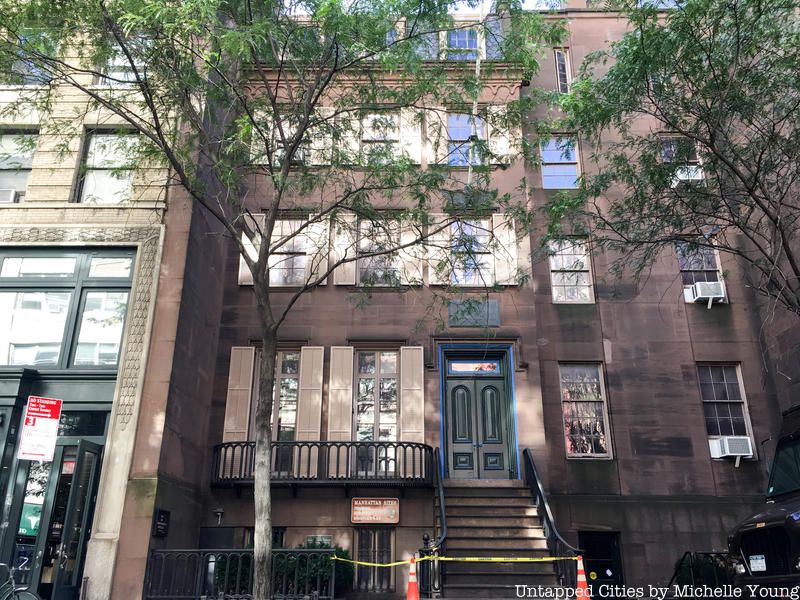
Theodore “Teddy” Roosevelt is the only United States President born in New York. He was born in the house pictured above, in 1858, located at 28 East 20th Street in Manhattan. His family lived in this house until 1872. The original home was completely demolished in 1916, but in 1919 the property was purchased to erect a replica of Roosevelt’s birthplace.
Roosevelt was adamant against having a “shrine” constructed in his honor; however, his relatives only acquiesced to this request until he passed in 1919. The reconstructed home, which is made to look like the interior design of the house during the years 1865-1872, was donated to the National Park Service in 1963 which runs tours of the site.
Teddy was one of four children and due to severe ailments such as allergies and asthma, he spent most of his childhood confined indoors and in this house. To fill his time, he consumed mass amounts of natural history books. He even called his collection of books and artifacts from his family’s travels in his room, the “Roosevelt Museum of Natural History”.
This zest for ancient history was very much fueled by Theodore Roosevelt, Sr., Teddy’s father, and one of the founders of New York’s American Museum of Natural History in 1869. In October 2012, the museum reopened the Theodore Roosevelt Rotunda after a two-year conservation of the murals.
The house stores many interesting pieces, taxidermy, and original artifacts from Roosevelt’s time in this property. The tour guide pointed out pieces of furniture that were unique to Teddy, such as the velvet ottoman placed by the fireplace just for him. The velvet chair was there for him due to the horse-hair-covered chairs that were very irritating to his skin. The gas-powered chandeliers and lamps in the salon also aggravated his asthma. His father believed that the cure-all for Teddy’s asthma was exercise. Thus, a gymnasium was installed on the second floor, off of the nursery porch. You can see more images of the interior here.

Wave Hill House was built in 1843 by William Lewis Morris, grandnephew of Lewis Morris, signer of the Declaration of Independence, and later sold to publisher William Henry Appleton. The Roosevelts rented Wave Hill House in the Bronx from Appleton in 1870 and 1871, when Teddy was 12 and 13, in hopes to aid his asthma. The historians at Wave Hill believe these summers inspired Teddy’s later contributions to the conservation of natural parkland.
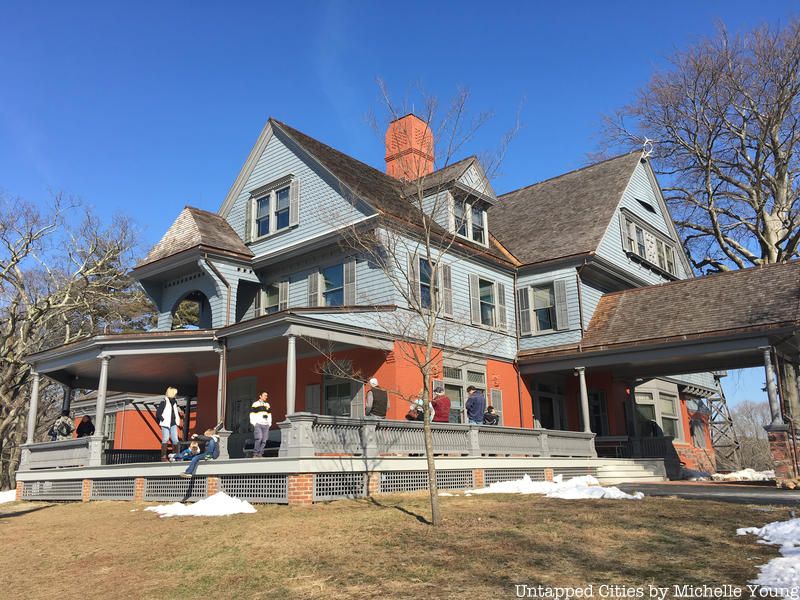
Theodore Roosevelt lived on his estate in Sagamore Hill from 1885 until he died in 1919, using the house as his “Summer White House” while President of the United States for two terms from 1901 to 1909. In 1880, Roosevelt purchased this property at the youthful age of 22, buying 155 acres of land for $30,000. By 1886, the Queen Anne style house was up, designed by the Manhattan firm of Lamb & Rich, who also designed Pratt Institute in Brooklyn and Barnard College. Today, the house can be visited as one of the sites of the National Park Service, with guided tours.
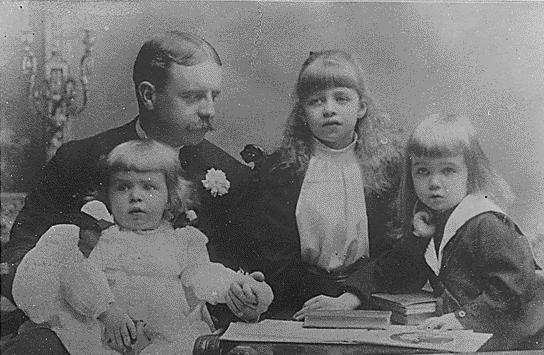
Anna Eleanor Roosevelt, center, with her father and siblings in 1892. Photo from Wikimedia Commons.
Jumping to the other famous Roosevelts, Franklin and Eleanor were residents of Manhattan as well. While Franklin Delano shares the same name and also became an American president, it was Eleanor who was more closely related to Theodore Roosevelt. Eleanor’s father, Elliott Roosevelt, was Teddy’s younger brother, and FDR was Teddy’s fifth cousin.
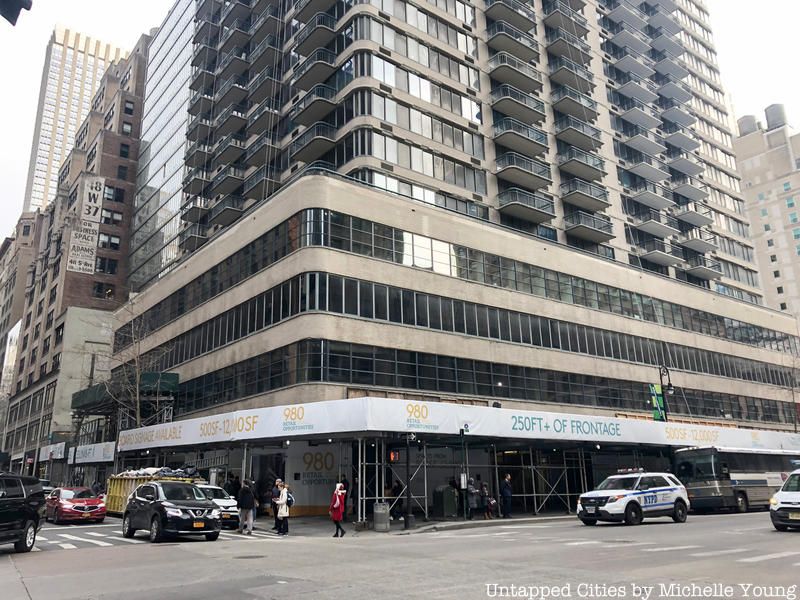
Eleanor Roosevelt was born in a house at 56 West 37th Street in 1884. Both her parents died when she was young and she was sent to live with her grandmother in Tivoli, New York, and later to England. 56 West 37th Street has since been replaced by a commercial building.
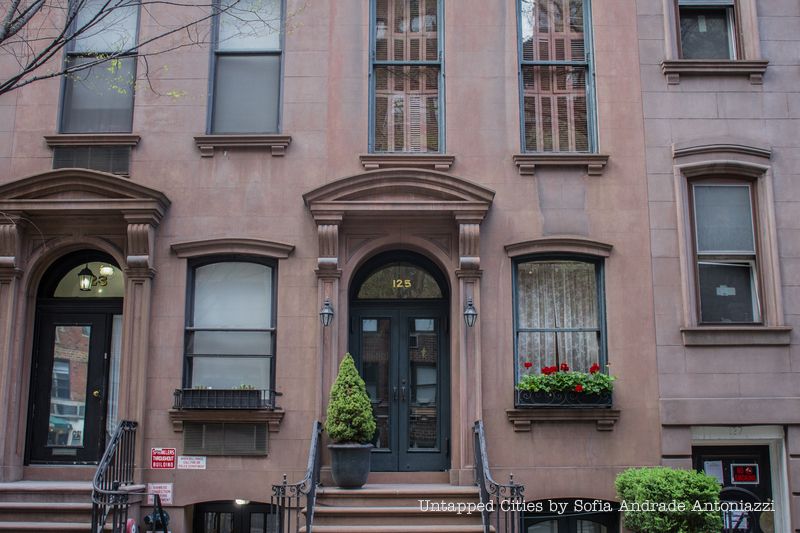
Eleanor Roosevelt met FDR when he was studying at Harvard. In 1904, after FDR and Eleanor were married, they lived in a townhouse at 125 East 36th Street, a place FDR’s mother, Sara Delano Roosevelt, rented for them. Sara would have a lasting influence, or some say interference, in the couple’s lives.
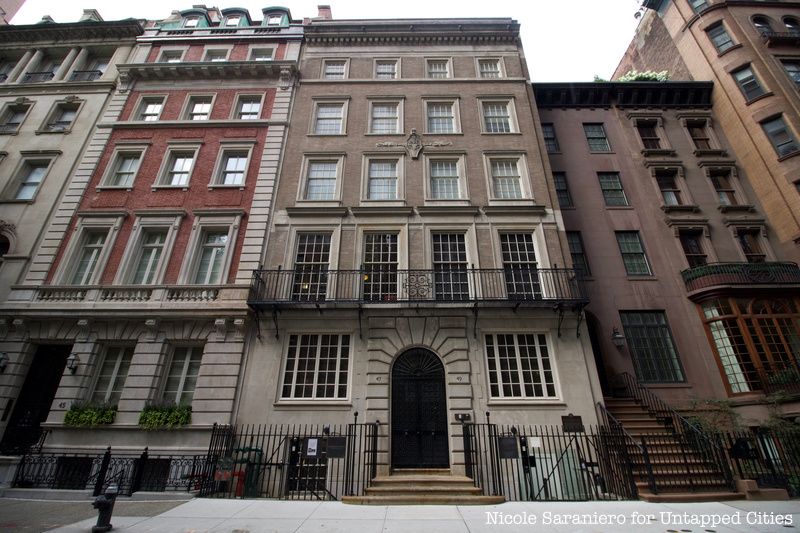
The adjoining townhouses at 47-49 East 65th Street were commissioned by FDR’s mother for the new couple as a Christmas gift. In 1908, Eleanor and FDR moved into 49 East 65th Street while Sara Delano moved into 47 East 65th Street.
Architect Charles Platt designed the building to have two identical residences joined with a single entrance (FDR’s mother lived in the adjacent residence). In later memoirs from Eleanor, she lamented the first few years of living in the house next to her mother-in-law as she never felt like it was a place of her own. Throughout the property, there are interconnecting doors between the parlor rooms, reception areas, and main sitting areas. The six-story building has a facade made predominantly of brick and limestone. The house was acquired by Hunter College in 1942 and became a New York City landmark in 1973.
It was largely during their residence here that the most significant events and political policy contributions by Eleanor and FDR were made. Roosevelt recovered from his diagnosis of polio here in 1921, began his ascent into politics as a New York senator, was elected President, and inked the New Deal. Eleanor was very involved with the Women’s Trade Union League at this time and forging equality in women’s rights.
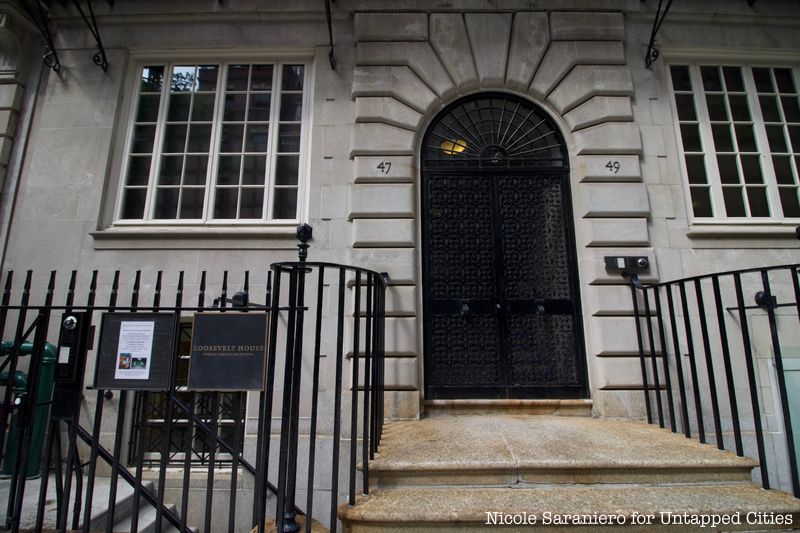
Unfortunately, the house decayed over the years and it wasn’t until the President of Hunter College, Jennifer Raab, secured funding for a remodel and new additions to the house in the early 2000s, that the house was under proper care. The library was converted into a museum and seminar room, the reception rooms were opened up as spaces for classes, receptions, and presentations, and the upper floors became offices as well as apartments for special visiting scholars.
The remodel was completed in 2010 and became the home of the Roosevelt House Public Policy Institute at Hunter College. While the school is only open to students and staff of Hunter’s College, you can contact the school to set up a tour with an advance reservation. The website for the college provides great background on the history of the house during the Roosevelts’ residence, the Hunter College acquirement, and the remodel.
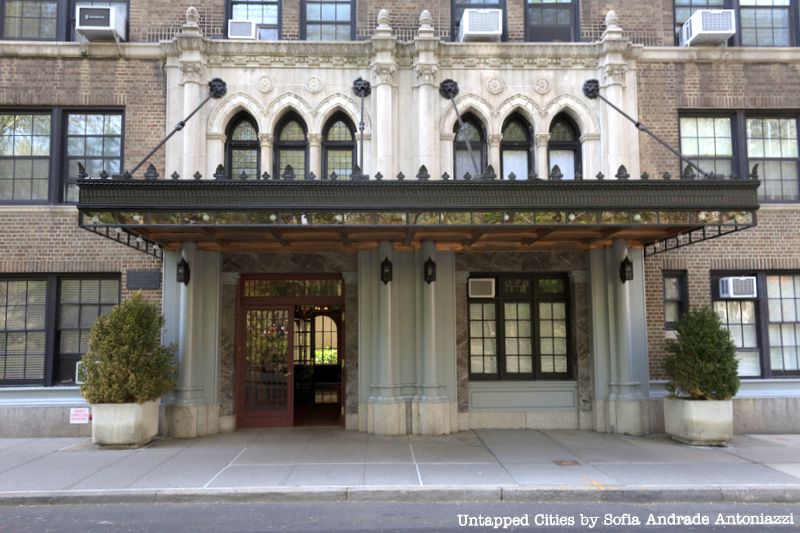
A handsome Washington Square Park building was the New York City home of Eleanor Roosevelt from 1942 to 1949 when she served as the delegate to the United Nations. It was during this time, prior to and after FDR’s death, that she worked on the Universal Declaration of Human Rights.
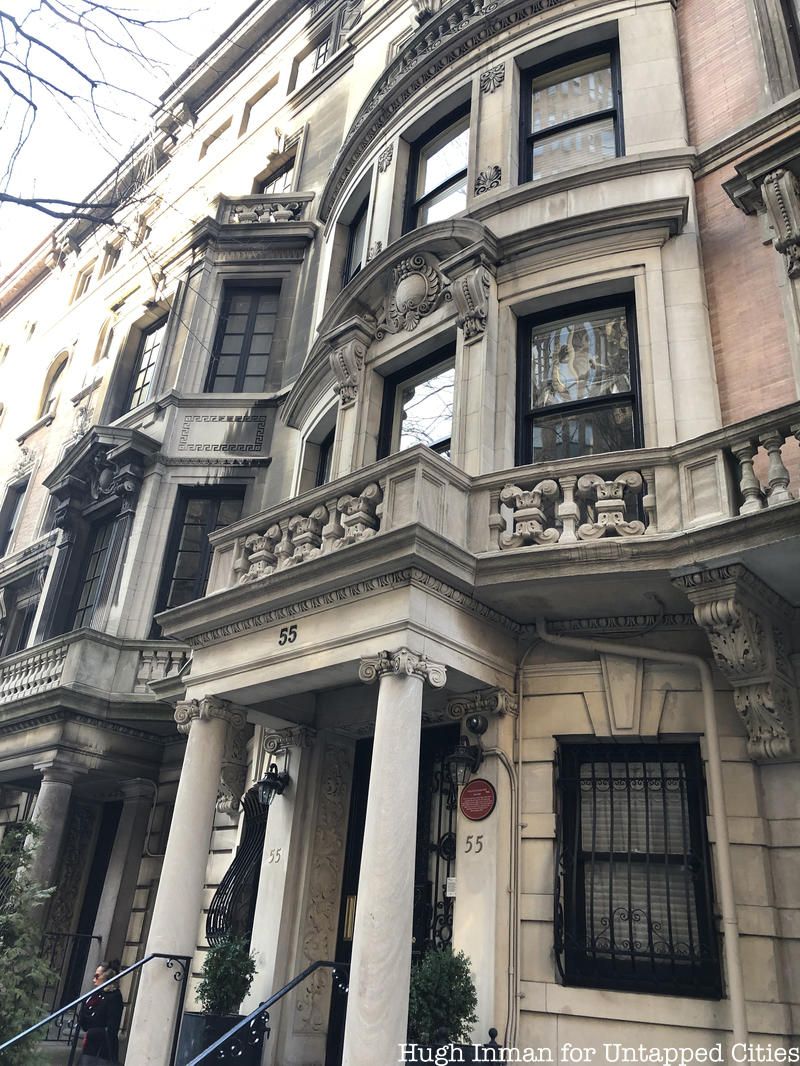
This townhouse at 55 East 74th Street was the home of Eleanor Roosevelt during the last few years of her life. There she entertained and met with some of the most important figures of the late 1950s and early 1960s, including John F. Kennedy and Nikita Khrushchev. Mrs. Roosevelt died in her home on November 7, 1962. The townhouse has changed very little on the outside since Mrs. Roosevelt’s time there.
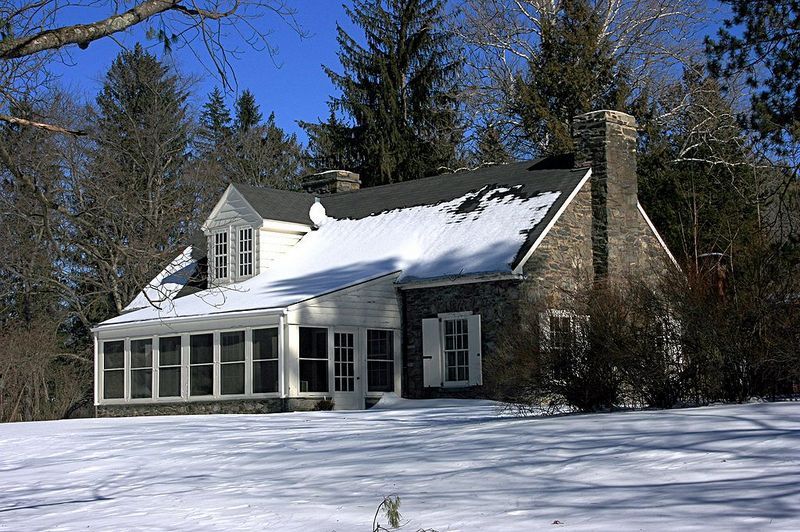
Eleanor Roosevelt’s Val-Kill. Photo via Wikimedia Commons by Rolfmueller
Springwood is the most recognizable of the Roosevelt homes in Hyde Park, New York. The estate was purchased by his father, but the look Springwood has today is the result of renovation and remodeling done by FDR, financed by his mother. Also on the historic site is the stone cottage of Eleanor Roosevelt, known as Val Kill, and FDR’s retreat, Top Cottage. FDR donated the site to the estate to the American people in 1943.
The City of New York has honored Franklin Delano Roosevelt’s legacy with FDR Four Freedoms Park on Roosevelt Island, which opened last fall. Read about more presidential haunts from Grant to Obama.

Subscribe to our free newsletters
Free Newsletters
Get the best stories and things to do sent straight to your inbox.
